Aquarium Algae: How to Identify It and Control Green Growth
A little algae in an established fish tank is normal. You may see a fine green film on glass or a small patch on a stone. But a sudden coating over every leaf, long strands tangled through plants or cloudy green water can tell you that something in the aquarium needs attention.
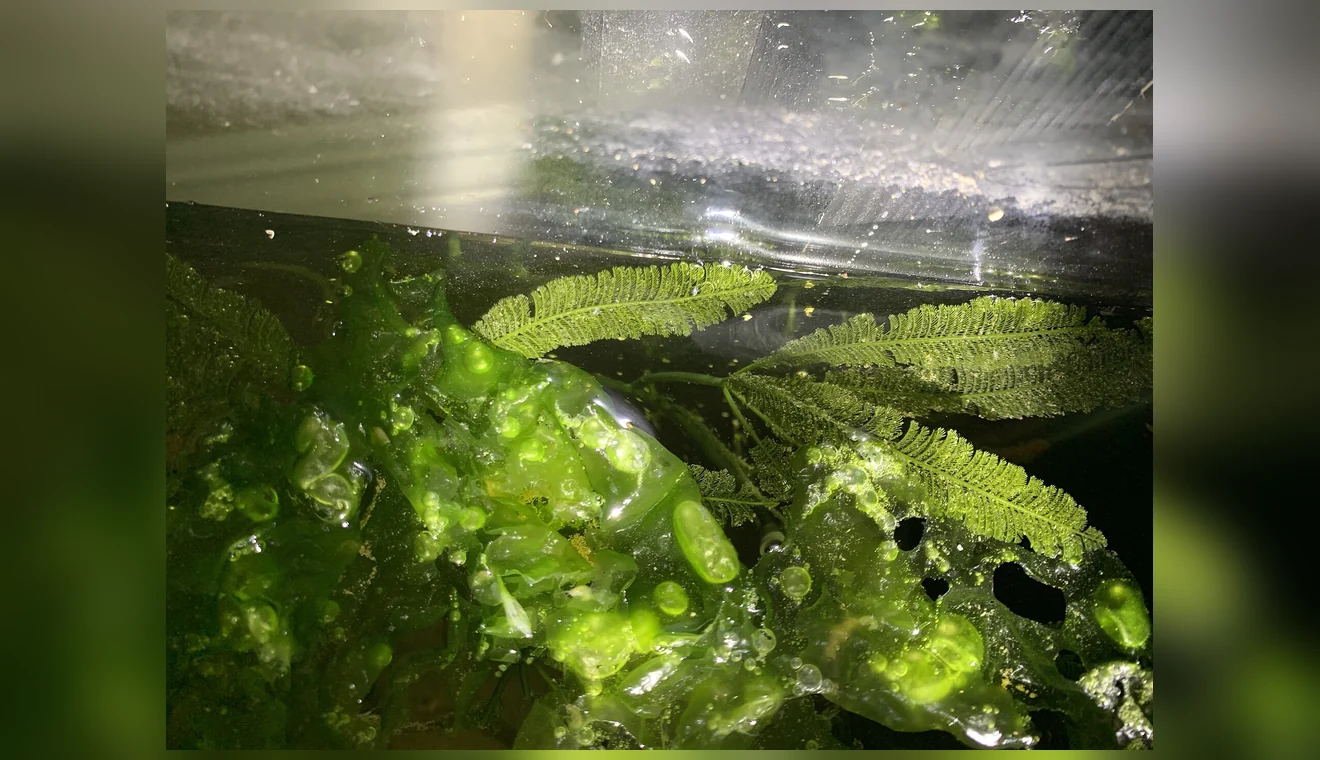
The sensible approach is to identify the type of growth, test water quality and review light, feeding and maintenance before using a treatment. Algae isn't one single problem, and a product marketed as an instant cure may not address the cause.
Is aquarium algae always harmful?
No. Many aquariums develop some algae as part of a mature ecosystem. Certain fish, snails and shrimp graze on it, although none should be introduced solely as a substitute for proper maintenance.
Algae becomes a problem when it covers plants, indicates an unstable nutrient balance or makes it difficult to keep the tank safe and clean.
Severe green-water blooms can also affect oxygen and visibility under certain conditions, especially when growth and decay are rapid.
Start by observing where the algae appears and how quickly it grows. A weekly photograph can make changes easier to compare.
Common types of aquarium algae
| Appearance | Often described as | What to investigate |
|---|---|---|
| Soft green film on glass | Green dust or film algae | Lighting period, normal cleaning frequency |
| Hard green spots on glass | Green spot algae | Light intensity and nutrient balance |
| Long green threads | Hair or filamentous algae | Lighting, plant growth and nutrients |
| Brown coating in a new tank | Diatoms / brown algae | Tank maturity and silicates; often temporary |
| Green water with poor visibility | Free-floating algae bloom | Light exposure, nutrient loading and water tests |
| Dark brush-like tufts | Often called black beard algae | Flow, plant health and overall balance |
These are visual descriptions, not laboratory identification. Some outbreaks require more careful assessment, especially if the material is slimy and spreads rapidly.
Blue-green “algae” is often cyanobacteria, a different kind of organism. Don't assume the same treatment works for every green or blue coating.
Start with water tests, not chemicals
Check ammonia, nitrite, nitrate and any additional parameters appropriate to the livestock and plants.
OATA recommends regular water testing and keeping ammonia and nitrite at zero. Nitrate targets vary by species and your source-water conditions.
A spike in ammonia or nitrite is a more urgent problem than unsightly green glass. Deal with the fish welfare issue first.
Our Aquarium Nitrate Guide explains why nutrients build up, while the High Ammonia Guide covers emergency warning signs.
Review the lighting period
Aquatic plants need light, but excessive duration or direct sunlight can encourage algae growth.
If the aquarium is by a sunny window, consider moving it away from direct sun or shading it appropriately without blocking normal room ventilation.
Use a simple timer so the artificial light follows a consistent schedule. Many keepers start with a moderate daily photoperiod and adjust for the plants, rather than leaving lights on until bedtime.
There is no single magic number of hours that suits every planted tank. Light intensity, plant growth, nutrients and carbon dioxide all interact.
Avoid plunging the entire tank into darkness indefinitely. Livestock and plants still need a predictable day–night cycle.
Check how much you feed
Food left to decay contributes nutrients to the water. Some fish also produce more waste when routinely overfed.
Give species-appropriate portions and remove obvious leftovers. Don't starve fish as an algae-control strategy.
If algae appears after increasing the number of fish, consider whether the filtration and maintenance routine can accommodate the added waste load.
OATA recommends stocking gradually, allowing beneficial bacteria to adjust to changes in feeding and livestock.
Clean the glass and remove growth gently
A suitable aquarium scraper or magnetic cleaner can remove film from glass without adding chemicals.
Use tools appropriate to glass or acrylic; a blade that works on glass may scratch acrylic. Never use household detergent or surface cleaner in the aquarium.
For hair algae, remove loose strands by hand or with a clean dedicated tool, taking care not to damage plants or trap animals.
Siphon out dislodged debris during a normal suitable partial water change. Avoid tearing down the entire aquascape because of one patch.
Algae on live plants
A leaf that is covered in algae may be damaged, aging or growing poorly. Healthy new growth often competes differently for light and nutrients.
Trim badly affected leaves only where appropriate for the plant species. Don't remove so much plant material that you destabilise a well-established aquarium.
Assess lighting, fertiliser and carbon dioxide together if you maintain a specialist planted tank. Adding nutrients at random can make matters worse.
OATA's planted-aquarium care guide emphasises that plants do not eliminate the need for filtration or partial water changes.
Does a water change help with algae?
Regular partial changes remove some dissolved waste and suspended material. They also provide an opportunity to siphon debris and clean accessible surfaces.
The correct amount depends on your fish, shrimp, plants and water conditions. Sudden very large changes may stress livestock if chemistry and temperature differ.
Our Fish Tank Water Changes Guide covers routine preparation and safe technique.
A water change can help the overall balance, but it won't solve a tank that remains in direct sunlight all day while being overfed.
Should you buy an algae-eating fish?
Only if that species genuinely suits your tank: adult size, group size, temperature, water parameters and compatibility all matter.
Some fish sold as algae eaters grow very large. Others require social groups or specialised diets, and some hardly touch the algae you actually have.
OATA publishes species-specific care for tropical algae eaters and warns that suitability differs between species.
Don't add a fish to “clean up” and then discover it needs a bigger tank or outcompetes the animals you already keep.
What about algae-removing chemicals?
Algaecides and other treatments can affect plants, beneficial microorganisms and sensitive invertebrates. Shrimp and snails may be especially vulnerable to certain ingredients.
Always identify the problem and check that any product is appropriate for your livestock before use.
Never mix several algae treatments in one attempt to get faster results. A sudden die-off of algae can also create decaying material that affects water quality.
For persistent or unusual outbreaks, seek reputable aquatic specialist advice instead of escalating doses.
Brown algae in a new aquarium
Brown dust-like coatings are common in some newer freshwater setups and may involve diatoms. They can be temporary as the tank matures.
Test ammonia and nitrite rather than assuming the tank is safe because the brown growth appears harmless.
Gently remove excess coating, continue appropriate maintenance and give the system time to stabilise.
Don't buy multiple new fish or snails simply because a new tank has a brown film.
Green water isn't the same as green glass
Green water is a suspension of microscopic organisms in the water column, so wiping the glass does little.
It can be associated with bright light and nutrient imbalance. Some setups benefit from specialist filtration or controlled lighting changes, but the solution depends on the livestock.
Our Cloudy Fish Tank Water Guide explains other reasons aquarium water looks cloudy, including harmless dust and bacterial blooms.
Treat the cause rather than pouring in a product simply because the water appears green.
A sensible algae-control routine
- Identify where the growth is and how quickly it spreads.
- Test ammonia and nitrite before anything else.
- Record nitrate and relevant plant parameters.
- Check light intensity, timing and sunlight exposure.
- Review food portions and livestock numbers.
- Remove excess growth gently and siphon debris.
- Make appropriate conditioned partial water changes.
- Reassess after a consistent period instead of changing five things in a day.
Keep a notebook or photograph. This prevents chasing short-term changes without knowing what actually helped.
Common algae-control mistakes
Treating any algae as an emergency
A small film on glass is not equivalent to harmful water chemistry.
Adding “cleaner fish” without research
They create waste and have needs of their own.
Leaving lights on continuously
Consistent appropriate lighting is better than endless illumination.
Replacing all filter media
This can disturb the nitrogen cycle and create more serious problems.
Using chemicals before identifying livestock risks
Some products are unsuitable for shrimp, snails or sensitive plants.
Frequently asked questions
Can I remove all algae permanently?
Some algae is a normal feature of aquariums. The goal is manageable growth and stable water quality, not a sterile ecosystem.
Does high nitrate always mean algae?
Not necessarily. Light, other nutrients and plant competition also influence growth.
Why is my aquarium glass green again after cleaning?
The conditions encouraging film algae may still be present. Review light and nutrient input rather than cleaning more aggressively.
Should I turn off the light for a week?
Don't apply extended blackouts automatically. Confirm the type of outbreak and consider plants and animals before altering the lighting.
Balance is more useful than a quick fix
Algae responds to conditions in the aquarium. Normal lighting, appropriate feeding, a functioning filter and routine care usually matter more than a bottle promising a miracle.
Keep the livestock's needs first, make changes gradually and judge the result over time.
Sources and further reading
- OATA: Setting Up a Planted Aquarium — plant needs, nutrients and routine maintenance.
- OATA: How to Look After Tropical Algae Eaters — species requirements rather than buying fish as cleaning tools.
- OATA: Freshwater Aquarium Water Testing — nitrate, ammonia and general water testing.