Axolotl Tank Size: How Much Space Does One Axolotl Need?
The first thing to know about axolotl tanks is that floor space matters more than height. An axolotl spends much of its time walking along the bottom, resting in hides and occasionally swimming. Two aquariums can hold a similar number of litres and offer very different living conditions.
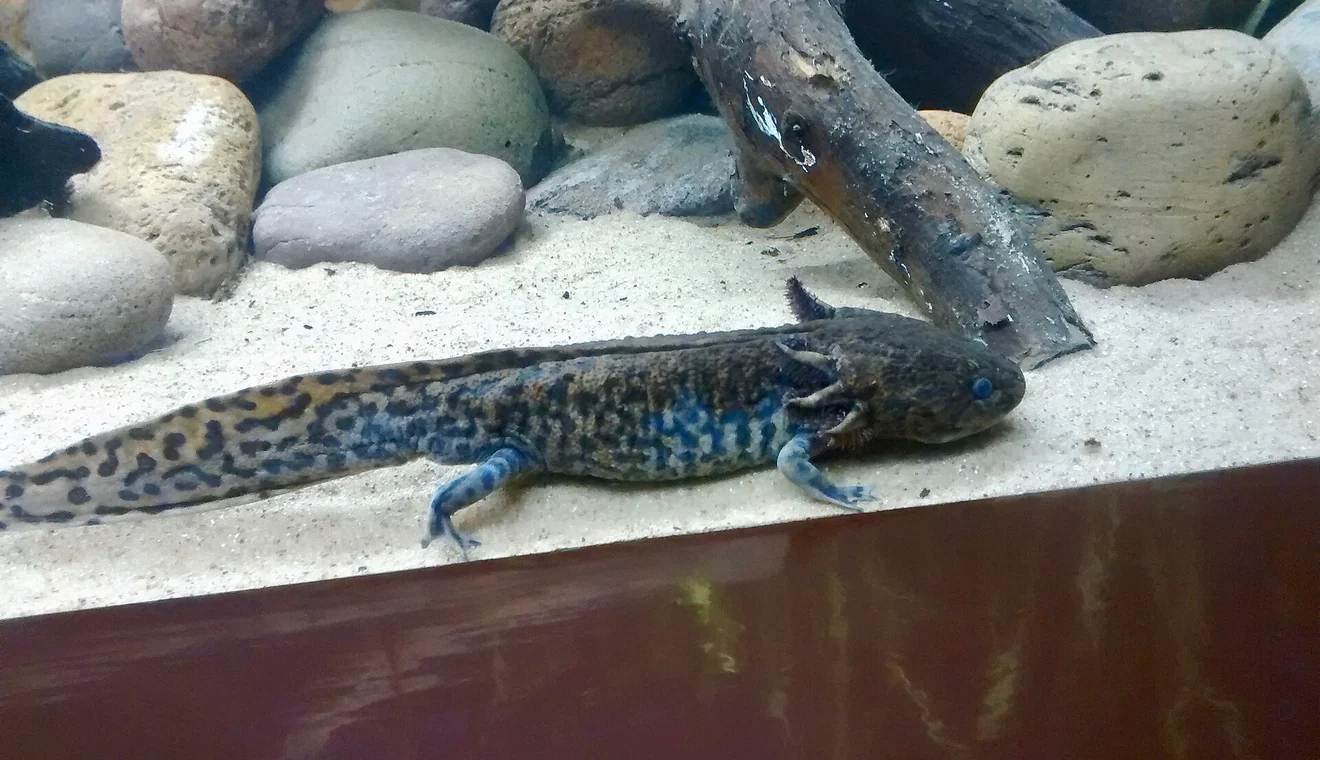
If you're setting up a tank in the UK, resist buying a tall aquarium simply because the advertised capacity looks generous. Look at the internal length, width and usable floor area, then check whether you can keep the water consistently cool and clean.
The short answer: aim for a wide, roomy tank
Axolotl Central gives about 110 litres (29 US gallons) as an absolute lower limit for a single axolotl and recommends a much roomier breeder-style aquarium with roughly a 91 × 46 cm footprint. Its guide describes this larger option as around 180 litres and as a “40-gallon breeder”. Those labels are not an exact conversion: 40 US gallons is about 151 litres. Check a UK tank's actual dimensions and published litre capacity rather than assuming they mean the same thing.
That distinction matters: the smallest figure is not a comfortable target. A footprint around 90 × 45 cm, or larger where practical, is a better starting point than a narrow tank with an impressive litre figure.
Axolotl Central gives a broad example of a 40-gallon breeder-style tank measuring around 91 × 46 × 40 cm externally. Product sizes vary, so always check actual dimensions before purchase.
Two tanks with similar stated litre capacity can give very different space. A tall, narrow model may have less usable floor area than a shorter, wider one.
Why tank length and width matter
An axolotl is an amphibian, not a fish that spends all day cruising through open water. It walks along the substrate, searches for food, uses shelters and needs room to turn comfortably.
A wide floor gives you space for several stable hides and clear pathways between them. It also lets you keep equipment away from the areas where your axolotl prefers to rest.
Tank height still matters for water volume and safe maintenance, but extra height cannot compensate for an inadequate footprint.
Compare two tank shapes
Imagine a tall display tank and a low aquarium with the same capacity. The tall tank might look impressive from the sofa, yet its bottom can feel cramped once you've added a filter, décor and a couple of hides.
The lower tank gives more walking room. It can also be easier to reach the bottom for cleaning and spotting uneaten food.
Before buying, mark out the footprint with masking tape on the stand or floor. It's a useful way to see how much usable space you're really getting.
How to work out the water volume
For a basic rectangular aquarium, multiply the internal length × width × filled water depth, all in centimetres, and divide the result by 1,000. That gives the approximate volume in litres before subtracting displaced water.
Our Aquarium Volume Calculator does this automatically and distinguishes UK imperial gallons from US gallons. That matters when comparing North American care guides with UK aquarium listings.
Don't assume the advertised capacity equals the real water in the tank. Substrate, hides and space below the rim affect the amount you actually fill.
However, water volume alone is not a stocking recommendation. The footprint, temperatures, filtration and waste handling remain essential.
Can two axolotls live together?
Keeping axolotls together isn't as simple as doubling the litres. Axolotls may snap at each other during feeding, and young animals in particular can injure tankmates. Size differences make that risk greater.
A separate aquarium is usually the safest option for a beginner. If you are considering more than one, research the animals' sizes, feeding behaviour and compatibility with an experienced axolotl keeper before attempting shared housing.
A divider doesn't automatically solve every problem: it can restrict usable floor area and complicate filtration or access. Don't overcrowd a tank merely because the chemistry tests look normal.
A fully cycled filter is essential
Axolotls produce substantial waste for their size. A filter must be able to process ammonia and nitrite, but its water movement must also suit an animal that generally prefers a gentle current.
Run the tank without an axolotl until the biological filter has matured. Use a reliable liquid test kit and follow a fishless aquarium cycling guide before introducing any livestock.
A tank can appear beautifully clear while containing harmful ammonia or nitrite. Check water quality rather than relying on appearance.
A sponge filter or a suitable filter with dispersed output can reduce strong currents. Avoid a narrow jet blasting straight at the animal's favourite hide.
Keeping the water cool in a UK home
Axolotls need cool, stable water. Axolotl Central describes a suitable range of roughly 12–20°C, with temperature management particularly important as the water approaches and exceeds 20°C. The exact target should follow current specialist husbandry advice.
A UK house can still become too warm in summer, particularly in a top-floor room or beside a sunlit window. Choose the location with summer in mind, not just the temperature on the day you buy the aquarium.
Use a reliable thermometer you can read easily. Fans can assist evaporative cooling, but a properly sized aquarium chiller may be necessary in a warm home. Account for the ongoing electricity and equipment cost before acquiring the animal.
Don't place an axolotl tank next to a radiator, in direct sun or in a draught where temperatures swing suddenly. Avoid hurried cooling that causes an abrupt change.
Substrate and décor
Bare-bottom tanks are easy to inspect and clean, particularly while settling a new animal into a home. Fine suitable sand can work in some adult setups, but loose gravel and small pebbles pose ingestion risks.
Never rely on an axolotl being “too big to swallow” a small piece of gravel. They feed by suction and can take in substrate with food.
Use smooth hides with more than one accessible opening where practical. Check every cave, tube and ornament for sharp edges, narrow pinch points and rough surfaces that could injure delicate skin or gills.
Provide shaded areas. Axolotls don't need intense decorative lighting, and bright unshaded tanks may lead them to spend all day hiding.
A simple tank with a couple of good hides and easy-to-clean surfaces is often more practical than a display packed with ornaments.
Daily and weekly care
A tank's size is only one part of good husbandry. Make it easy to complete the following routine:
- Daily: check temperature, observe the axolotl's appetite and movement, and remove visible uneaten food or waste.
- Regularly: test ammonia, nitrite, nitrate and other relevant water parameters.
- Weekly or as tests indicate: carry out an appropriate partial water change using dechlorinated, temperature-matched water.
- As needed: gently rinse filter media using removed tank water, following the filter's instructions. Don't strip the biological filter clean.
- Always: inspect equipment and hides for loose pieces or sharp edges.
If ammonia or nitrite is detected in an occupied tank, treat it as a water-quality problem requiring prompt, species-appropriate action and advice. Don't wait for the animal to look distressed.
Mistakes when choosing an axolotl tank
Buying on litre capacity alone
A tall aquarium might have enough water on paper but very little space to walk. Compare the bottom dimensions.
Starting with the bare minimum and planning an upgrade
Upgrading can mean another cycle, more equipment, moving a delicate animal and buying a second stand. If space and budget allow, start with a suitably larger tank.
Forgetting summer cooling
A thermometer reading in November tells you little about an uninsulated bedroom during a July heatwave. Plan before the animal arrives.
Using a high-flow fish filter
A filter suitable for active tropical fish may create too much current. Choose equipment that handles waste without forcing the axolotl to battle a continuous jet.
Leaving gravel because it looks natural
The risk of accidental ingestion outweighs any decorative benefit. Choose a safer base and appropriate hides.
Common questions about axolotl tank size
Is a 60-litre aquarium big enough?
Not as a permanent home for an adult. It is below the bare-minimum guidance given by Axolotl Central and typically offers inadequate floor space.
Do axolotls need a lid?
A secure, ventilated cover can help prevent escapes or accidents and keep household objects out of the water. Ensure any cooling equipment can still operate safely.
Can I use a fish tank for an axolotl?
Yes, if it offers the right footprint, water volume, filtration, cool temperature and safe furnishings. The fact that it was originally marketed for fish doesn't make it unsuitable.
Can an axolotl live with fish?
Tankmates are risky. Some fish may nip the axolotl's gills, while others may be eaten. A species-only setup is the sensible beginner choice.
Buy the footprint, not the label
For one axolotl, look for a broad aquarium around 90 × 45 cm in footprint or larger, checking the actual litres and working water depth, rather than choosing the smallest tank a seller will accept. Then check the real inside dimensions, safe substrate, gentle filtration and how you'll keep the water cool all year.
If those essentials aren't practical in your home, it's worth delaying the purchase until they are. You can always buy the animal later; it's harder to change the basic dimensions of the tank once it's in place.
Sources and further reading
- Axolotl Central: Axolotl Care Guide — recommended tank footprints, water quality, filtration and temperature.
- Axolotl Central: Frequently Asked Questions — cooling considerations and suitable equipment.
- OATA: How to Set Up and Look After a Freshwater Tank — biological filtration and fishless cycling.