Betta Fish Feeding: Pellets, Frozen Food and How Much to Give
A betta fish will often come to the front of its tank when someone approaches. That doesn't mean it needs another meal. These colourful fish can be enthusiastic feeders, but uneaten food and excessive portions quickly damage water quality.
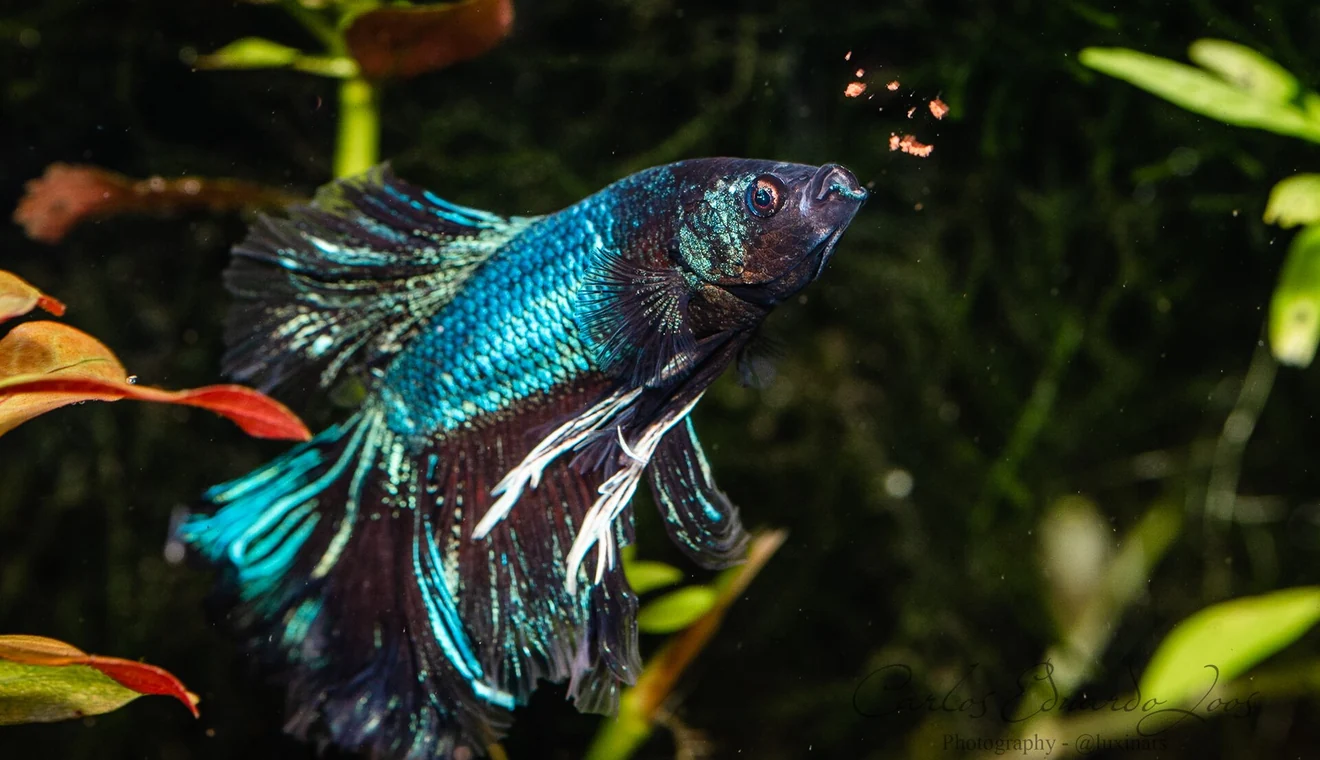
Use a suitable complete betta pellet as the main food, offer small amounts of appropriate frozen or live foods for variety, and avoid overfeeding. The UK's Ornamental Aquatic Trade Association (OATA) advises feeding what the fish can eat within a few minutes, typically once per day.
What do betta fish eat?
Common Siamese fighting fish, Betta splendens, are naturally adapted to eating small animal prey and other suitable protein-rich items.
OATA recommends a dedicated betta pellet food and occasional suitable live or frozen foods, such as daphnia, bloodworm or tubifex.
| Food | Role | Precaution |
|---|---|---|
| Complete betta pellets | Everyday balanced staple | Use small appropriate portions |
| Frozen daphnia or suitable larvae | Occasional variety | Thaw appropriately and follow food safety instructions |
| Reputable live foods | Stimulation and variety | Avoid contaminated wild-collected prey |
| Human leftovers | Not appropriate | Salt, seasoning and nutrition mismatch |
| Ordinary tropical flake mix | Not always suitable as sole staple | Check formulation for betta requirements |
The aim is a varied appropriate diet, not an endless rotation of treats.
How often should you feed a betta?
OATA's UK guidance advises feeding once daily, giving only what a betta can eat within a few minutes.
Some experienced keepers use different routines, particularly for juveniles or fish with health needs. There is no safe universal pellet count for every size of fish.
Follow the instructions on a reputable betta food product and adjust sensibly for the animal's age, condition and activity.
Remove uneaten food promptly. Its decay can contribute to ammonia and poor water quality.
A fish that begs whenever you arrive isn't necessarily hungry.
How many pellets per meal?
The right number depends on the size and formulation of the pellets. Five tiny micro-pellets may contain less food than two large ones.
Start with a small amount and watch what the fish actually eats. Don't keep adding until the animal stops showing interest.
Avoid following a rigid “exactly four pellets” rule from a video without knowing the pellet size or the fish's condition.
Check for a swollen abdomen, repeated floating difficulty or uneaten food when reviewing the amount.
For a medically vulnerable fish, ask an aquatic veterinarian or reputable specialist for individual advice.
Why bettas should not be overfed
Extra food can create two problems: an inappropriate calorie intake for the fish and more waste for the biological filter to process.
Uneaten food settles between plants and substrate, where it decomposes.
OATA recommends checking ammonia and nitrite regularly, keeping both at zero mg/L in a mature aquarium.
Our High Ammonia in a Fish Tank Guide explains the more urgent water-quality consequences of excess waste.
Don't assume a new food will solve floating, bloating or lethargy without checking the complete habitat and health.
Are bloodworms a complete food?
No. Bloodworm may be used as an occasional suitable frozen or live food, but it is not a replacement for an appropriate complete diet.
OATA lists bloodworm, daphnia and tubifex among foods that can provide variety.
Frozen foods should be stored and handled according to the manufacturer's instructions. Use clean dedicated equipment and never refreeze thawed food unless specifically permitted.
Avoid relying on wild-caught foods that may carry pollutants or parasites.
Offer modest quantities, especially if the fish is already being fed pellets daily.
What about daphnia?
Daphnia are small aquatic crustaceans that can be offered in suitable prepared live or frozen forms.
They may encourage natural hunting behaviour and provide dietary variety.
This doesn't make daphnia a universal medical treatment for constipation or bloating. A betta that appears unwell needs its water and health checked.
Use foods from reputable aquarium suppliers and avoid introducing contaminated water into the tank.
Some bettas will enjoy chasing moving prey, while others prefer pellets. Preferences vary.
Can bettas eat ordinary fish flakes?
A good complete food formulated for bettas is a more reliable foundation than generic fish flakes designed for unrelated species.
A suitable high-quality tropical food may sometimes be included as part of a wider diet, but check its nutrition and manufacturer's instructions.
Don't choose food solely because a pellet floats. The fish needs appropriate nutrients, not just a convenient shape.
If the fish has trouble taking its food, inspect mouth health, water quality and the pellet size before changing the entire diet.
For specialised breeding or juvenile feeding, seek species-specific advice.
Should you fast your betta?
Some advice recommends a routine fasting day, but this is not a universal requirement stated in OATA's basic care guide.
Don't withhold food repeatedly to compensate for chronic overfeeding. Adjust the ordinary portion and assess the fish's body condition instead.
A sick, underweight or growing fish may need a different feeding plan.
For bloating, reduced appetite or repeated swimming problems, seek appropriate veterinary or specialist advice rather than treating fasting as a guaranteed cure.
What if the betta spits out food?
A fish may reject food because pellets are too large, unfamiliar or difficult to swallow.
Try an appropriate smaller formulation and observe whether it takes normal food under calm conditions.
However, repeated refusal can also indicate stress, unsuitable temperature, poor water quality or illness.
Test the aquarium and check its heating and filtration. If the behaviour persists or the fish loses condition, obtain specialist advice.
Do not keep dropping in different foods until the substrate is full of leftovers.
Water temperature affects feeding
Bettas are tropical fish. OATA lists a suggested temperature range of 20–28°C for commonly kept tank-bred fish.
Consistent appropriate warmth matters for digestion and normal metabolism.
A cold aquarium can make the fish sluggish or uninterested in food. But increasing the heater far beyond the recommended range is not an appropriate response.
Check the actual temperature with a thermometer and inspect the heater.
Our Betta Fish Tank Size Guide explains why a proper heated, filtered aquarium matters more than a decorative bowl.
Feeding in a community aquarium
Bettas may struggle with fast aggressive tankmates or fish that steal food.
Check compatibility carefully before combining species. A long-finned male may be vulnerable to fin-nipping.
Feed in a quiet place where you can confirm the betta receives enough food without competing constantly.
Avoid overfeeding the whole community to compensate for one shy fish.
OATA recommends keeping bettas with placid tankmates when mixing is appropriate, and cautions against male-male housing.
A simple daily feeding routine
- Check fish activity and water temperature.
- Offer a small portion of suitable betta food.
- Observe whether it is eaten normally within a few minutes.
- Remove remaining pieces and check the aquarium for trapped leftovers.
- Record unusual appetite changes.
- Test water and carry out routine maintenance regularly.
The process should be calm and predictable, not a daily competition to see how much the fish can eat.
When refusal to eat is concerning
Seek specialist advice if a betta repeatedly refuses meals, becomes lethargic, develops an abnormal body shape, has breathing difficulty or shows unusual swimming.
Check ammonia, nitrite, temperature and the function of the filter immediately.
A sudden decline following the addition of tankmates or new equipment may indicate environmental stress.
Some fish disease signs need diagnosis and appropriate treatment; changing the pellet brand alone cannot solve them.
Common feeding mistakes
Adding food whenever the fish approaches
Begging behaviour isn't a reliable hunger measurement.
Giving huge frozen-food portions
Treat foods can crowd out normal nutrition and increase waste.
Leaving uneaten pellets in the gravel
They decompose and affect water quality.
Keeping a tropical betta in cold unfiltered water
Diet quality cannot compensate for poor husbandry.
Treating fasting as a cure for disease
Persistent symptoms need water testing and specialist assessment.
Frequently asked questions
Should a betta eat every day?
OATA recommends small daily feeding as a normal routine for healthy adult bettas, with adjustments for individual needs.
How many pellets should I give?
Use the actual food's size and directions rather than a universal pellet count.
Can bettas eat bloodworms?
Suitable live or frozen bloodworms may provide variety, but should not become the entire diet.
Does a betta need vegetables?
Bettas are adapted to animal-based foods. Use an appropriate complete betta diet rather than treating them as grazing vegetarian fish.
Small meals, stable water
A suitable betta pellet, occasional appropriate variety and careful monitoring provide a reliable feeding routine.
Pay as much attention to the aquarium as the food container. Clean, filtered water and a stable tropical environment are essential to keeping the fish healthy.
Sources and further reading
- OATA: How to Look After Siamese Fighting Fish — betta diet, feeding frequency, water parameters and compatible housing.
- OATA: Freshwater Aquarium Water Testing — ammonia and nitrite testing, routine maintenance.