Cockatiel Behaviour: Crest Positions, Sounds and Body Language
A cockatiel's crest can change shape in seconds. It may stand tall when the bird hears a surprising noise, settle gently backwards while the bird rests, or flatten when something makes it uncomfortable. It is tempting to translate each crest position into a single emotion, but bird behaviour is more complicated than that.
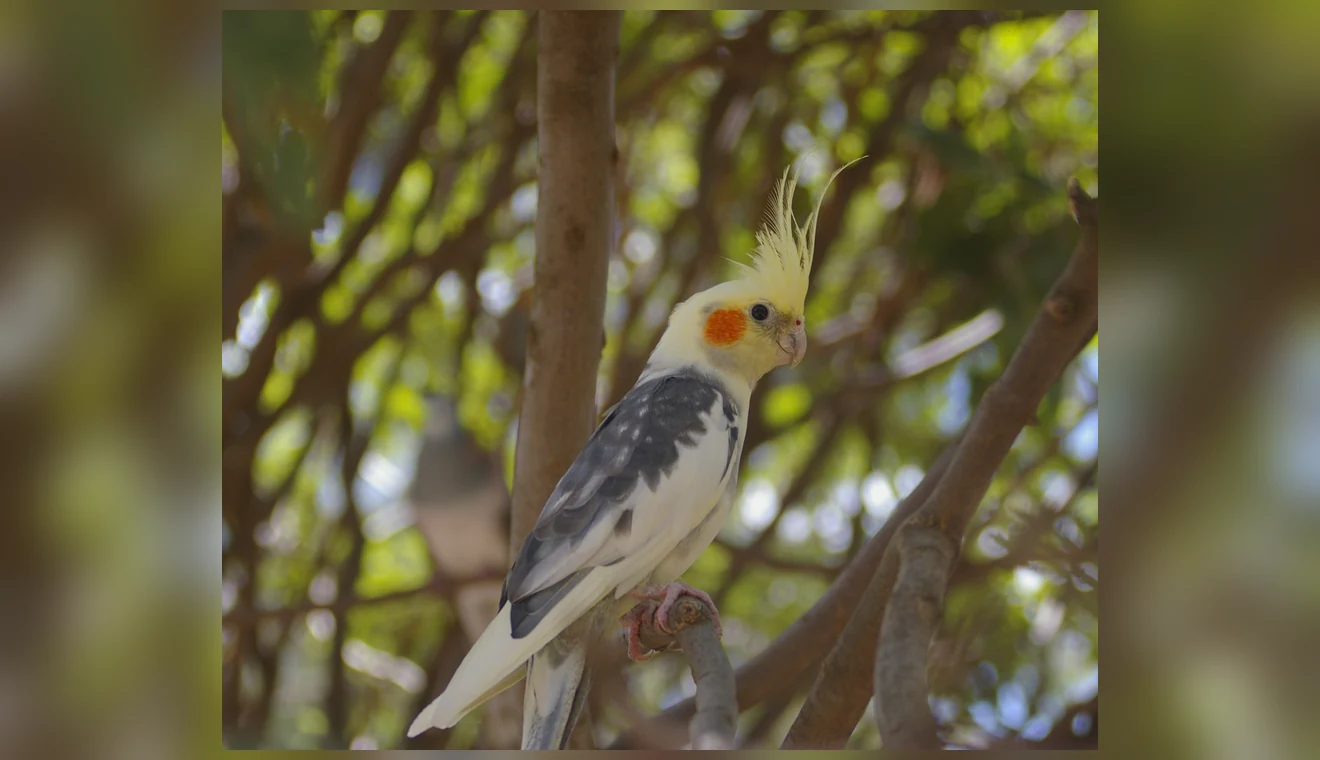
Read your cockatiel's whole body: crest, eyes, feathers, posture, movement, sounds and the situation around it. A bird that is relaxed during a familiar routine may look quite different from one that is frightened or unwell.
A sudden nocturnal panic episode is different from normal alert calls; see cockatiel night-fright first aid if your bird flaps against the cage.
What does a cockatiel's crest tell you?
The movable crest is one of the most obvious communication features of a cockatiel.
| Crest appearance | Possible meaning | What else to look for |
|---|---|---|
| Raised sharply upright | Interest, alertness or surprise | Is the bird curious, tense or trying to move away? |
| Gently angled back | Often resting or comfortable | Loose posture, normal breathing and voluntary activity |
| Flattened close to head | May indicate fear, anger, tension or intense focus | Hissing, lunging, avoidance or a crouched body |
| Changing frequently | Reacting to the surroundings | New sounds, people, other birds and activities |
A crest alone cannot establish a bird's mood. Body position, previous experience and context are essential.
If a bird repeatedly freezes or panics in response to something, increase distance and avoid forcing exposure.
Why does my cockatiel hiss?
A hiss is usually a warning that the bird is uncomfortable and would prefer more space.
It may occur when someone reaches into a hide, approaches a nesting area or tries to touch a bird that does not want handling.
Do not punish the bird for warning you. Hissing is a useful signal that it has reached its limit.
Move back, give it a way to retreat and reconsider how the interaction began.
If hissing has started suddenly in a normally friendly bird, look for changes in the home, stress, pain or illness and consult an avian vet if necessary.
What does a cockatiel whistle mean?
Cockatiels often whistle, chirp, call and learn short sound patterns. Some birds are more vocal than others.
A familiar contact call can be a way of keeping in touch with people or other birds. Excited whistles may occur when a favourite person enters the room or when a routine begins.
Don't assume that every loud sound is a sign of happiness. The pitch, urgency and surrounding behaviour all matter.
A persistent high-pitched alarm call with frantic movement deserves attention, especially if a strange animal or noise is nearby.
Our Parrot Enrichment Guide covers safe social and activity opportunities that can reduce frustration from an unstimulating environment.
Why cockatiels grind their beaks
Gentle beak grinding sometimes occurs when a bird is settling down to sleep or resting comfortably.
That can be a normal behaviour, particularly when combined with a relaxed posture and ordinary breathing.
However, abnormal repeated mouth movements, difficulty eating or unusual breathing should not be dismissed as contentment.
Observe whether the sound occurs in a normal resting context and whether the bird remains interested in food and its surroundings.
If in doubt, an avian veterinarian can assess the beak and mouth.
Fluffed feathers: relaxed or unwell?
Birds can fluff their feathers briefly while grooming, resting or conserving warmth.
A cockatiel that briefly puffs up, preens and returns to normal activity may simply be comfortable.
Persistent fluffing with lethargy, reduced appetite, drooping posture or unusual droppings is a warning sign. Birds often conceal illness, so contact an avian vet promptly.
Do not wait for a bird to become obviously weak before asking for help.
Check room temperature and air quality, but don't assume a heating adjustment will treat a medical condition.
Why does a cockatiel lift one foot?
Some birds rest with one foot tucked into the feathers. This can be a normal comfortable sleeping posture.
Look for otherwise relaxed behaviour, stable balance and appropriate use of both feet when moving.
A bird that refuses to bear weight on one foot, limps or has swelling may have an injury or foot problem.
Check perch types, surface cleanliness and potential pressure points.
A persistent foot issue needs an avian veterinary examination.
What does head bobbing mean?
Head bobbing can occur during excitement, social displays, food begging or courtship, depending on the bird and its age.
A young bird may show begging behaviour that looks different from adult displays.
Context matters. Does it happen while someone prepares food, when another cockatiel appears or when the bird is trying to communicate?
Do not treat all head movement as harmless. Loss of balance, repeated uncontrolled movements or an unwell bird need veterinary care.
Keep a short video of an unusual movement to show the vet rather than trying to describe it from memory.
Why cockatiels nibble and gently explore
A bird may use its beak to test a surface, steady itself on a hand or investigate a toy.
Gentle beak contact is not automatically biting. Birds use their beaks for many normal activities.
If pressure increases or the cockatiel pulls away, stop the interaction calmly.
The RSPCA recommends positive training and respecting bird body language rather than forcing contact.
Don't allow a child to continue touching a bird after it has shown clear avoidance or warning signs.
What about biting?
A bite can be caused by fear, frustration, territorial behaviour, pain or a history of unwanted handling.
Try to understand what happened immediately beforehand. Was the bird cornered? Did a person reach towards its food or a favourite resting place?
Avoid punishment or shouting. Those reactions can increase fear and sometimes reinforce the behaviour through attention.
Teach voluntary step-up behaviours using suitable rewards and short sessions.
If biting is frequent or severe, seek qualified avian behaviour advice and rule out medical problems.
Wings held open or body leaning forward
A cockatiel may open its wings while stretching, cooling, balancing or communicating during a display.
The same general posture may have different meanings depending on whether the bird is alert, frightened or engaged in courtship.
A bird leaning forward while hissing and preparing to lunge is not inviting touch.
Breathing with wings held away from the body and obvious distress may suggest overheating or illness rather than ordinary play.
Observe the whole animal and seek veterinary guidance for abnormal breathing or weakness.
Cockatiel mating and hormonal behaviour
Courtship may include vocalisations, strutting, head movements, regurgitation or interest in dark spaces that resemble nests.
The RSPCA discusses sexual and attachment-related behaviour in parrots and recommends calm, careful management rather than encouraging overstimulation.
Avoid petting the body or back in ways that may encourage sexual behaviour. Gentle head-only contact is generally a better choice when the bird voluntarily accepts it.
Manage inappropriate nest-like cavities and ask an avian vet about egg-laying concerns, particularly if a female is repeatedly producing eggs.
Sudden changes in behaviour can also be medical, so don't assume hormones explain everything.
Do cockatiels need company?
Cockatiels are naturally social birds. Appropriate companionship and regular safe interaction are important for welfare.
But introducing two unfamiliar birds requires careful consideration of health, cage size, behaviour and compatibility.
Do not simply push two birds into one cage and expect friendship.
The RSPCA's bird housing guidance recognises cockatiels among species that may live in compatible groups, provided accommodation and resources are appropriate.
Our Cockatiel Diet Guide covers feeding stations, ration balance and why a bird's actual intake needs monitoring in a group.
Signs of fear or stress
Possible warning signs include escaping from a hand, frantic flapping, persistent hissing, freezing, refusing normal food or avoiding a previously comfortable area.
Changes in routine, loud noises, other animals, cramped housing and forced handling can contribute.
Move the bird away from the immediate pressure, provide secure perches and allow normal resting behaviour.
Never punish frightened reactions. The RSPCA recommends allowing a startled bird to settle before approaching.
If fear persists, consult an avian vet or certified bird behaviour professional.
A quick body-language checklist
- Is the bird eating and moving normally?
- Has anything in the environment changed?
- Are its posture and feathers relaxed or tense?
- Does it approach voluntarily or try to leave?
- Is the sound a familiar call or a new distressed vocalisation?
- Is the behaviour brief, or does it persist with signs of illness?
- Can you give the bird more space or a quieter location?
Keeping notes helps identify patterns rather than guessing from one isolated gesture.
Common mistakes
Assuming an upright crest means happiness
It can also indicate surprise or tension.
Interpreting every hiss as naughtiness
A hiss is often a request for space.
Thinking a quiet bird must be healthy
Birds can hide illness; appetite and posture matter.
Forcing step-up when the bird is frightened
Use positive training and voluntary participation.
Treating persistent fluffing as relaxation
Combined with lethargy, it can indicate illness.
Frequently asked questions
Why does my cockatiel raise its crest when I enter?
It may be alert, interested or surprised. Look at the rest of its posture and whether it approaches willingly.
Is beak grinding normal?
It often happens while settling to rest, but abnormal eating or breathing needs assessment.
Why does a cockatiel scream?
Loud calls can have many causes, including contact calling, fear and frustration. Review the environment and behaviour context.
Does a cockatiel understand when it is being punished?
Punishment is not a reliable way to teach calm handling and may create fear. Use reward-based methods.
Observe before you interpret
Cockatiel behaviour makes much more sense when you look at the whole bird and its surroundings.
A crest position is a clue, not a translation. Watch eating, movement, sound, social contact and voluntary choices—and seek an avian vet if anything about the bird's health seems wrong.
Sources and further reading
- RSPCA: Pet Bird Behaviour — fear, biting, abnormal feather damage and responses to unwanted behaviour.
- RSPCA: Housing and Environment for Pet Birds — social housing, activity and suitable perches.
- RSPCA: Enrichment for Pet Birds — natural activity and social stimulation.