Fish Tank Water Hardness: GH, KH and Safe Adjustments
Aquarium water is not just 'hard' or 'soft'. Two common measurements—GH and KH—describe different aspects of its mineral chemistry, and each matters when choosing fish and keeping conditions stable. A hardness reading that suits a platy may not suit a soft-water specialist, so there is no ideal number for every tank.
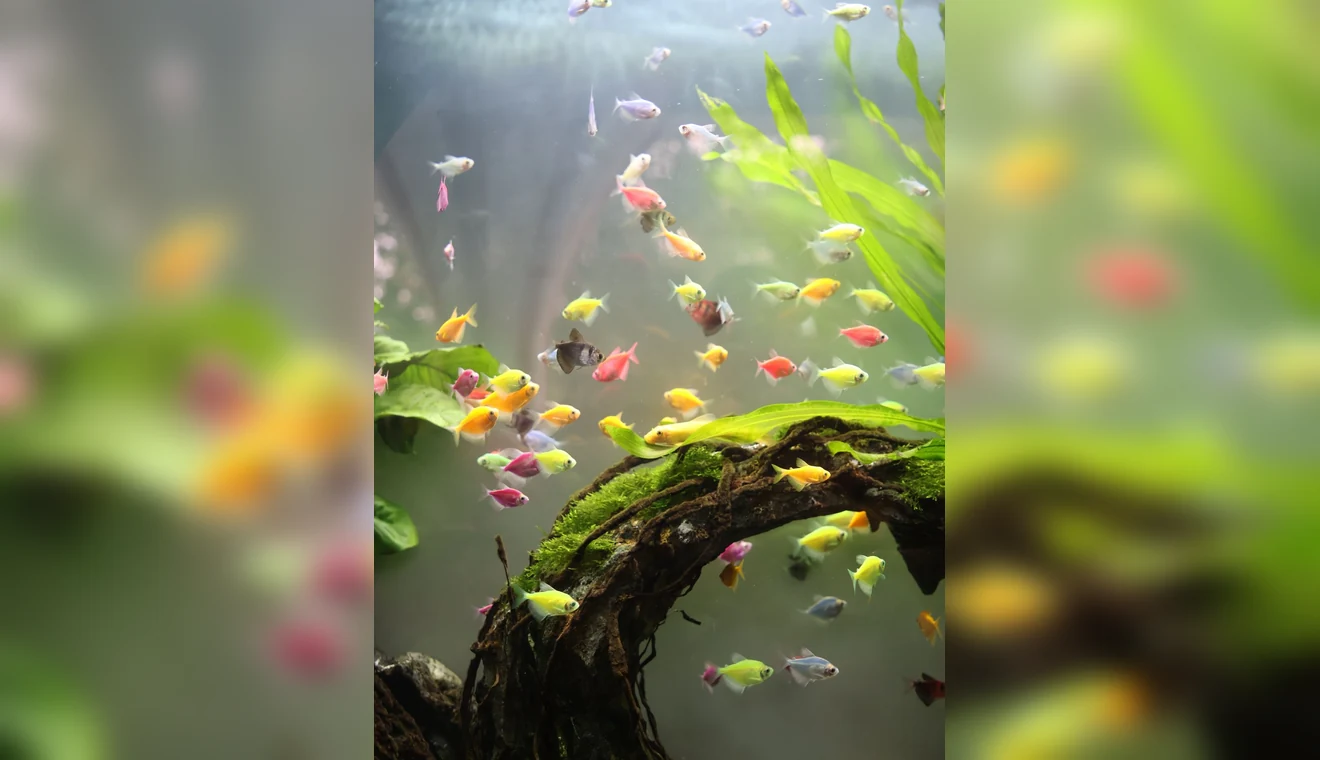
Before using a pH-lowering chemical or buying a fish labelled 'easy to keep', test your tap water and compare it with the needs of the species you intend to house. Stability is often more useful than chasing a perfect-looking result.
What is GH in an aquarium?
General hardness (GH) measures dissolved calcium and magnesium ions in water. These minerals affect animal physiology, including functions related to bones, shells and normal body processes. GH is often reported as degrees of general hardness (°dGH or °dH), or a concentration expressed as calcium-carbonate equivalents.
Practical Fishkeeping explains that GH helps indicate whether water is soft, medium or hard. Different species have different requirements. If you are keeping fish adapted to hard alkaline water, very soft water may not suit them simply because the tank's pH happens to look acceptable.
What does KH mean?
Carbonate hardness (KH) is linked to water's alkalinity and its ability to buffer acids. In freshwater aquariums, KH usually reflects carbonate and bicarbonate capacity that helps resist sudden decreases in pH. It is commonly reported in degrees (°dKH).
GH and KH do not always rise and fall together. A tank can have appreciable general hardness but limited buffering, or vice versa, depending on its chemistry. This is why a single 'hardness' reading on a broad test strip may not give the whole picture.
Is KH the same as pH?
No. pH describes acidity or alkalinity at a particular moment; KH describes buffering capacity. Water can have a pH reading that appears normal while having little resistance to a future drop. Fishkeeper's water-testing guidance highlights this relationship.
Avoid adding 'pH up' or 'pH down' repeatedly to chase a target without understanding KH. Sudden chemical changes can stress fish and may create instability far worse than a modest difference from an ideal figure.
How do you test GH and KH?
Use suitable freshwater GH and KH kits, often liquid drop tests. Follow the instructions for sample volume, number of drops and colour change. Record results with their units. Some strips give a broad estimate rather than a precise measurement, so use a more suitable test when the exact range matters.
Test your tap water as well as the aquarium, especially before introducing new fish. A local water company may publish general supply information, but the water coming from your own tap can still be worth checking directly.
How many degrees should an aquarium have?
There is no single safe or ideal GH/KH range for every species. OATA publishes care sheets with different recommended hardness values for different freshwater fish. For example, some danios or livebearers thrive in moderate mineral conditions while specialised soft-water animals may have different requirements.
Choose the livestock first, research its full range and then decide whether the water is suitable. Avoid collecting random internet targets from several species and averaging them into one number. Our aquarium cycling guide explains why ammonia and nitrite still need monitoring regardless of hardness.
GH and KH are not measures of nitrogen waste; our fish tank nitrate level guide covers testing, source water and gradual reduction.
Why different fish prefer different hardness
Fish species evolved in different habitats, from mineral-rich rivers to soft, lightly buffered waters. Their physiological needs and breeding behaviour can reflect those differences. Some popular community fish tolerate a reasonably wide range when acclimated carefully, while others are less flexible.
Ask a reputable retailer about the actual water in which the fish were raised, not only the species' reported wild parameters. A slow, planned adjustment can be safer than an abrupt transition made purely to match a chart.
Does aquarium décor change hardness?
Yes, some mineral-containing rocks, shells and substrates can release calcium or carbonate compounds into water, depending on chemistry and the material involved. This may raise GH, KH or pH over time. Before using decorative rock collected outdoors, check whether it is suitable for an aquarium and whether it will affect water parameters.
If your tap water is already hard, adding limestone or crushed coral may push it further from the needs of soft-water fish. Conversely, in a setup where buffering is deliberately required, some materials can play a planned role. Test rather than guess.
What about water changes?
A partial water change using suitably prepared water helps replace waste-laden water, but its GH and KH depend on the source. If you repeatedly top up evaporated water with hard tap water, minerals can accumulate because evaporation removes water, not salts.
Top-ups and water changes are different jobs. Follow the livestock's needs and use a consistent, tested water source. Our fish tank filter-cleaning guide covers another part of maintenance that shouldn't be confused with altering mineral chemistry.
Can you lower hardness safely?
Some aquarists mix appropriately treated reverse-osmosis (RO) water with mineral-containing tap water to reach suitable target parameters. The proportions and mineral replacement depend on species and water chemistry. Never switch a stocked tank suddenly to pure RO water. Very low mineral and buffering levels can be harmful.
If a significant change is required, consult a knowledgeable aquatic specialist, test each batch of replacement water and adjust gradually. Practical Fishkeeping explains why hardness changes can be more complicated than adding a bottle of pH conditioner.
How do you raise GH or KH?
There are commercial remineralising and buffering products for different aquarium purposes. Some replace calcium and magnesium, while others raise carbonate alkalinity. These are not interchangeable. Always choose products compatible with the fish or shrimp you keep and use measured doses with repeat tests.
Don't pour in baking soda or mineral salts because a forum suggests a single number without checking your tank size, pH, GH and KH. A small aquarium can change rapidly, and an unplanned correction can be worse than the original reading.
Hardness versus ammonia, nitrite and nitrate
Hardness is not a measure of nitrogen waste. A tank with perfect GH and KH can still contain toxic ammonia or nitrite. Conversely, a newly cycled tank with zero nitrite may have unsuitable hardness for its intended fish. Test both sets of parameters.
Our high fish-tank nitrite guide explains emergency priorities when fish are exposed to elevated nitrite. Don't attempt a hardness correction while ignoring an acute water-quality crisis.
Keep a simple testing record
Write down GH, KH, pH, temperature, the date, and whether the sample came from the tap or tank. Add notes on water changes, new substrates or fish introductions. Rechecking after a change helps you see which action affected the chemistry rather than relying on memory.
You don't need to buy every electronic monitor available. Reliable tests, correct units and consistent practices are usually more helpful than a collection of readings without context.
A sensible decision before buying fish
Test your source water, research the intended species using reputable care sheets and decide whether it is a sensible match. Choose a stable setup with suitable minerals and buffering; don't force a soft-water species into unsuitable hard water or repeatedly crash pH trying to correct it.
GH tells you about dissolved hardness minerals; KH tells you about buffering. Knowing both is a practical starting point for a healthier aquarium.
Sources and further reading
- Practical Fishkeeping: Understanding water hardness — GH, KH, regional water and measurement.
- Fishkeeper: Why test aquarium or pond water? — GH/KH definitions and pH buffering.
- OATA: Fish in unheated aquariums — species-based GH and KH guidance.