Guppy Care Guide: Tank Size, Temperature, Feeding and Breeding
Guppies are often sold as beginner-friendly tropical fish, and they can be rewarding to keep. Their colours, active swimming and relatively small size are appealing. But they still need a cycled, heated, filtered tank and stable water conditions.
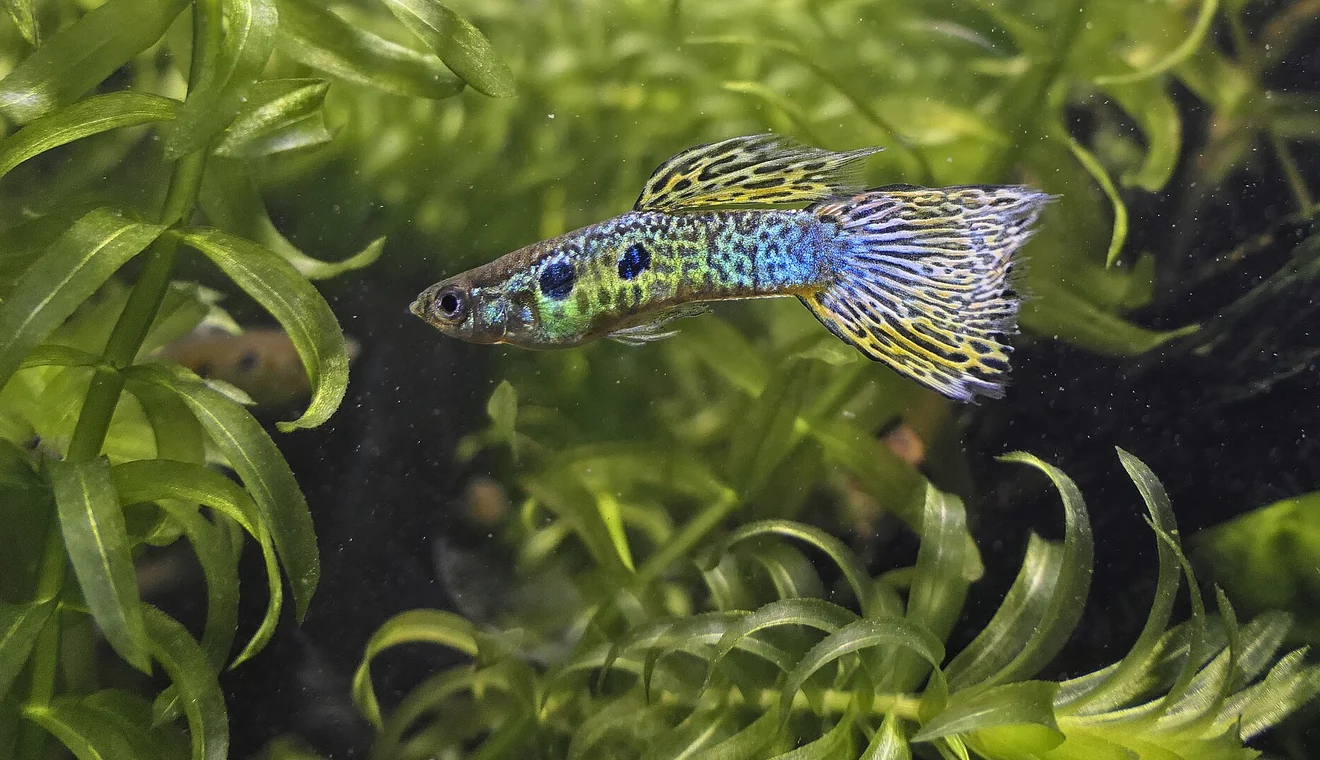
For a small group of guppies, OATA suggests at least a 45-litre aquarium, with larger tanks offering better stability and more room to accommodate their active behaviour. This guide covers the choices that matter before you bring them home.
What kind of fish is a guppy?
The common guppy is Poecilia reticulata. The smaller Endler guppy is Poecilia wingei. OATA groups these livebearing fish together in its freshwater guidance.
Male guppies usually have brighter colours and elaborate fins, while females are often larger and less flamboyant, although strains vary.
Both types are social fish that benefit from suitable group housing, not isolated novelty bowls.
Guppies are livebearers, which means females give birth to live young rather than laying eggs. This matters when deciding whether to keep mixed sexes.
Guppy tank size in litres
OATA recommends a minimum around 45 litres for a small group of the smaller species, with more space as group size and stocking increase.
| Setup | What to consider |
|---|---|
| Small compatible group | 45 L is an OATA starting minimum, not a generous maximum |
| Larger group | More water volume and swimming length |
| Mixed sexes | Potentially frequent fry; plan for population growth |
| Community aquarium | Check every other species' adult size, temperament and water chemistry |
A long rectangular aquarium provides useful swimming space. Don't select a tiny cube just because the fish are only a few centimetres long.
Our Aquarium Volume Calculator helps estimate actual water volume from internal measurements.
The tank still needs a mature biological filter, safe cover and species-appropriate furnishing.
What water temperature do guppies need?
OATA lists 20–28°C as the suggested temperature range for guppies and mollies.
A suitable thermostatically controlled heater is normally required in a UK home to maintain a consistent tropical temperature throughout the year.
Avoid placing the tank next to a radiator, sunny window or external door where temperatures fluctuate.
Use an independent thermometer rather than relying only on the heater dial.
Different guppy strains and individual fish may have additional needs, so don't use the published range as permission for sudden changes.
What pH and hardness do guppies need?
OATA's suggested values are:
| Parameter | OATA guppy care guidance |
|---|---|
| pH | 7.0–8.0 |
| General hardness (GH) | 8–18°dH, medium to hard |
| Carbonate hardness (KH) | 5–15°dKH |
| Ammonia | 0 mg/L |
| Nitrite | 0 mg/L |
| Nitrate | Generally no more than 20 mg/L above normal tap-water nitrate |
These numbers are a starting point for suitable tank-reared guppies, not a reason to dose chemicals suddenly.
Test your source water and aquarium before buying fish. Stable, appropriate conditions are more valuable than chasing decimals.
Our Aquarium pH Guide explains why source hardness and buffering matter.
Filter and water movement
Guppies need biological filtration to process waste. OATA is clear that a filter is always essential, even for small groups.
Some long-finned guppies struggle with strong currents. Use an appropriately sized filter with gentle flow and sheltered areas.
A sponge guard on the intake is useful if you expect tiny fry, to reduce the risk of them being drawn into the filter.
Do not replace all established biological media during normal cleaning. Beneficial microorganisms live on these surfaces.
Cycle the aquarium before stocking
A brand-new aquarium isn't safe simply because the water is clear. The filter needs to mature so ammonia and nitrite can be processed effectively.
Use a suitable fishless-cycling method and confirm zero ammonia and nitrite under the completed protocol before stocking.
Our Fish Tank Cycling Guide explains the steps.
When adding guppies, introduce them gradually, acclimatise according to their needs and test water more frequently during the initial period.
Never add a large number of fish at once to a filter that has only supported a small initial load.
Plants and places to hide
Live plants can provide cover for guppies and fry. Floating plants, where appropriate, may create sheltered areas near the surface.
Choose species suited to the water chemistry and lighting. Avoid adding plants that have been treated with chemicals unsuitable for fish or invertebrates.
If using artificial plants, check for sharp edges that could tear delicate fins.
Leave plenty of open swimming space. A tank packed with decorations may have very little usable area.
What do guppies eat?
Guppies are omnivorous and benefit from a suitable complete food formulated for small tropical fish.
Offer modest portions and remove obvious uneaten food. Overfeeding increases waste, and poor water quality is often more harmful than a fish missing a treat.
A varied diet may include appropriate prepared foods and occasional suitable frozen or live food from a reliable source.
Check the feeding instructions for the product and the livestock's actual needs. Do not rely on a universal “three flakes per fish” formula.
Guppies near the surface may look permanently hungry, but that isn't a reason to keep adding food.
Male or female guppies?
Keeping mixed sexes can result in frequent breeding. Guppies may produce multiple broods, and female guppies can store sperm.
A tank that is spacious for six adults can become overcrowded if many fry survive.
A carefully planned male-only group may avoid unwanted fry, but observe social interactions and fin-nipping. Male compatibility varies.
If keeping both sexes, plan for appropriate ratios, hiding areas and humane management of offspring. Never release unwanted fish into rivers, ponds or drains.
Ask a reputable aquatic retailer about compatible group composition before purchasing.
Guppy breeding and fry
Guppies give birth to live young that can be eaten by adult fish and other tankmates.
Dense fine-leaved plants may provide hiding spaces. A separate properly cycled grow-out tank may be needed if raising large numbers.
Avoid tiny unfiltered breeder boxes as permanent housing. Fry still require clean suitable water and appropriate food.
Have a realistic plan for growing fish before encouraging breeding. Don't assume every local shop will accept offspring.
Can guppies live with other fish?
Choose tankmates that share suitable temperature, pH, hardness and temperament.
Avoid aggressive fin-nippers or fish large enough to swallow guppies. Compatibility is about more than whether the species are both labelled “community fish”.
Some small shrimp and fry may be eaten by guppies. A community setup must consider the needs of every animal.
Don't introduce new species solely because they look colourful together.
Weekly water changes and testing
OATA recommends regular testing—at least weekly in an established freshwater setup—and partial water changes adapted to the tank.
Measure ammonia, nitrite, nitrate, pH and relevant hardness. Prepare dechlorinated replacement water with appropriate temperature and chemistry.
Our Fish Tank Water Changes Guide covers measuring litres and preserving biological filtration.
A clean-looking tank can still have harmful dissolved waste. Tests, rather than appearance alone, determine water quality.
Common guppy care mistakes
Buying a small bowl
Guppies need group space, filtration, temperature control and suitable water conditions.
Mixing sexes without a breeding plan
Populations can grow quickly.
Housing with aggressive fin-nipping fish
Long-finned guppies may be vulnerable.
Adding fish to an uncycled aquarium
Ammonia and nitrite are dangerous even if the water is clear.
Keeping very soft water without checking the species
Guppies generally favour medium-to-hard water under OATA guidance.
Frequently asked questions
Do guppies need a heater in the UK?
Usually yes. OATA recommends a heater to maintain the 20–28°C range year-round.
Can guppies live in 20 litres?
That is below OATA's 45-litre starting recommendation for a small group. Choose a more suitable aquarium.
Are guppies suitable for beginners?
They can be, provided the owner understands cycling, filtration, water chemistry and group behaviour.
How long does a guppy live?
Lifespan varies with strain, care and individual health. Plan for several years of responsibility rather than regarding them as disposable short-term pets.
Build the right tank before choosing colours
A group of guppies needs more than bright fins and a tiny aquarium. Choose enough water volume, suitable medium-to-hard conditions, a mature filter, plants and a responsible population plan.
Those choices make guppies a much better beginner fish than relying on the label “easy to keep”.
Sources and further reading
- OATA: How to Look After Guppies and Mollies — temperature, pH, hardness, group size and filtration.
- OATA: Setting Up a Freshwater Aquarium — aquarium preparation, cycling and safe stocking.