Bearded Dragon UVB: Lamp Strength, Distance and Safe Exposure
A bright-looking lamp doesn't tell you whether your bearded dragon is receiving useful ultraviolet light. A lamp can illuminate the enclosure while providing almost no UVB, and moving a powerful tube too close to the basking platform can create an unsafe exposure.
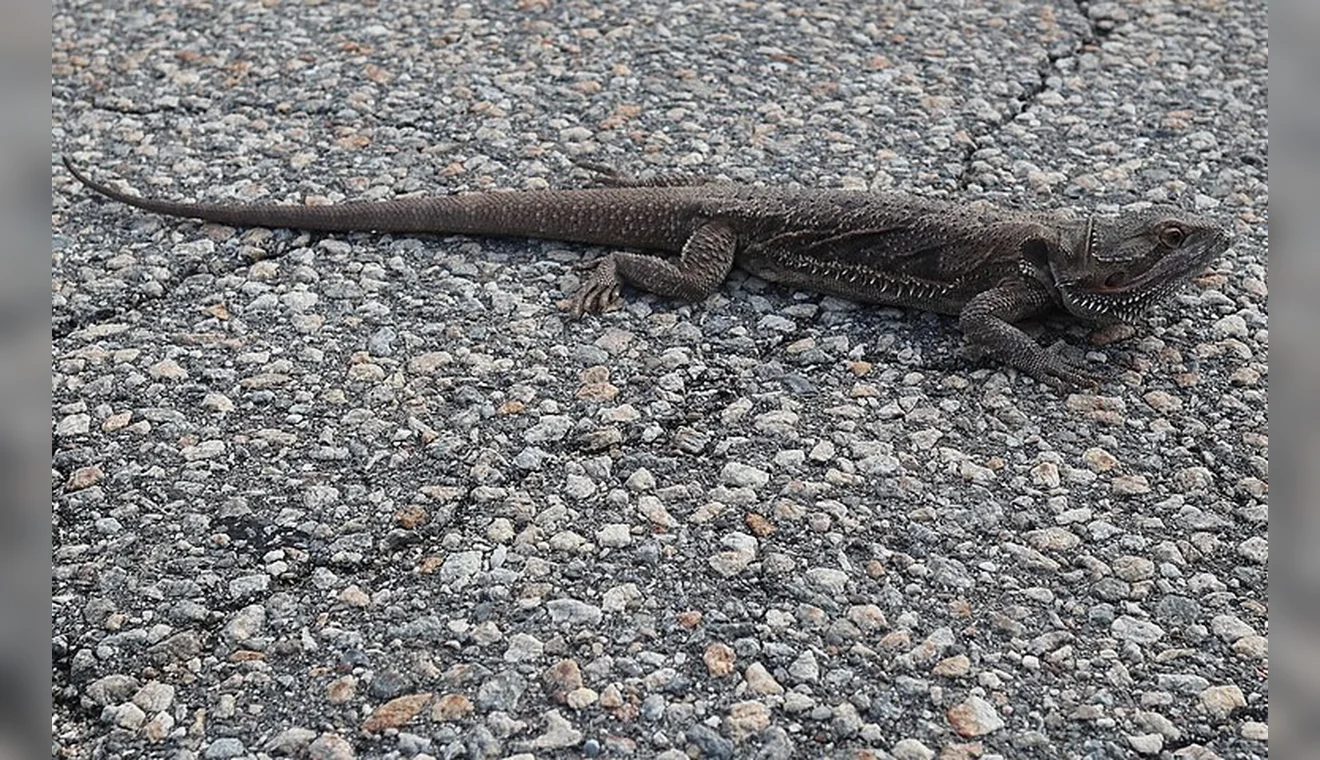
ReptiFiles recommends a UV Index (UVI) of approximately 4.0–4.5 at a bearded dragon's basking position. The exact fixture, reflector, mesh screen and distance determine how much ultraviolet radiation reaches the animal.
Lighting needs a correctly measured basking zone too; see bearded dragon temperatures for warm and cool areas and night heating.
Why do bearded dragons need UVB?
Bearded dragons are day-active reptiles that naturally bask in bright sunlight.
Appropriate ultraviolet B exposure helps them produce vitamin D3, which supports calcium absorption and normal skeletal health.
UVB alone is not enough: the animal also needs suitable heat, nutrition and access to a proper day-night cycle.
An enclosure with a weak UVB source and an incorrect diet can contribute to metabolic bone problems.
Don't diagnose soft limbs or weakness yourself. Seek a reptile-experienced vet if shell, bones, movement or appetite seem abnormal.
What is UV Index?
UV Index is a measurement of biologically relevant ultraviolet exposure at a particular point.
It provides more useful information than relying only on the percentage printed on a bulb box.
ReptiFiles states that central bearded dragons benefit from approximately UVI 4.0–4.5 in the basking area, measured using a suitable UV Index meter, such as a Solarmeter 6.5.
The animal also needs access to areas of lower exposure and shade.
A single high reading doesn't mean the entire enclosure should receive that same intensity.
T5 UVB tubes versus compact bulbs
Many modern bearded dragon setups use a suitable high-output T5 fluorescent UVB tube with a reflector.
A tube can provide a more useful illuminated basking area than a small compact lamp, provided its output and mounting position are suitable.
UVB placement depends on usable enclosure height, so check the bearded dragon enclosure-size guide when planning the lighting layout.
The exact model matters. Two different 12% or 10.0 UVB products may have different output characteristics.
Don't buy a bulb solely because a retailer calls it “desert” or “full spectrum”.
Check the model's manufacturer distance chart and the current species-specific guidance.
How far should the UVB tube be from the dragon?
Follow the instructions for the exact lamp, reflector and enclosure arrangement.
ReptiFiles publishes illustrative distances for particular combinations. For example, some Arcadia T5 HO Desert 12% kits need a different mounting distance when a mesh screen is present.
Never transfer a distance quoted for one UVB model to a different product.
Measure to the top of the animal's back at its actual basking position, not simply from the bulb to the enclosure floor.
A raised basking log can make the real distance considerably shorter.
Does mesh reduce UVB?
Yes. Depending on the mesh design, an enclosure screen can reduce the UVB reaching the animal.
The degree of reduction depends on wire thickness, hole size, fixture angle and installation.
Don't assume the screen blocks all UVB or none of it.
Use manufacturer guidance specifically covering your fixture and screen, and verify exposure with an appropriate meter when possible.
Avoid unsafe improvisations that put electrical fixtures or the animal in direct contact.
What about UVB through a window?
Ordinary window glass filters most useful UVB, even while allowing visible light and solar heat through.
Placing a vivarium beside a sunny closed window isn't equivalent to a suitable reptile UVB system.
Direct sunlight through glass may also overheat the enclosure unexpectedly.
Natural unfiltered outdoor sunshine can be beneficial under safe controlled conditions, but requires shade, temperature monitoring, secure housing and proper exposure planning.
Don't leave a bearded dragon unattended in a small glass box in the sun.
Position UVB alongside basking warmth
A bearded dragon often basks to warm its body and receive light at the same time.
Arrange the main useful UVB region in relation to the basking zone, allowing the animal to thermoregulate and move into shade.
A UVB tube generally doesn't provide the required basking heat. Use suitable dedicated heating equipment as part of the full setup.
Our Bearded Dragon Humidity Guide explains why warm and cooler areas also have different relative humidity.
The animal must have cool, shaded places and an appropriate retreat.
How long should UVB lighting stay on?
A predictable photoperiod helps maintain normal daily activity.
ReptiFiles describes providing bright daytime lighting and a suitable daily light-dark cycle for bearded dragons.
A timer can help keep equipment consistent, though the duration and seasonal schedule should be based on the animal's appropriate management plan.
Do not leave bright lights on continuously through the night.
If the dragon is following a properly assessed seasonal brumation plan, lighting management may differ from its normal active routine.
Our Bearded Dragon Brumation Guide explains why you shouldn't force a seasonal shutdown without veterinary assessment.
How often should UVB lamps be replaced?
The useful UVB output may decline before a lamp stops glowing visibly.
Follow the specific manufacturer's service-life instructions, which vary among models and fixture types.
Record installation dates and review whether the bulb is still producing appropriate UV exposure at the basking position.
A suitable UV meter can help, but only when used correctly.
Don't assume a bulb is effective simply because it is still bright.
What if you don't own a UV meter?
Choose a reputable lamp-and-reflector system with a published manufacturer distance chart that applies to your exact setup.
Ask an experienced reptile vet or competent reptile-care specialist to assess the planned installation.
Make sure a mesh lid, basking platform height or different reflector doesn't invalidate the quoted distance.
A digital room light meter and ordinary thermometer cannot measure UVI.
For unusual or particularly complex systems, professional measurement is more reliable than guessing.
UVB and dietary calcium
UVB and vitamin D3 are part of calcium metabolism, but diet remains important.
Young and adult bearded dragons have different nutritional requirements, so don't copy a juvenile feeding plan for a mature animal.
Discuss calcium and vitamin D supplementation with a reptile veterinarian familiar with the overall diet and lighting.
Avoid randomly combining high-dose supplements and a powerful UVB lamp because “more” sounds safer.
Poor movement, weakness, swelling or skeletal changes need an experienced reptile vet.
Safety checks after changing equipment
Any time you replace a tube, reflector or basking platform, check the real exposure and enclosure temperatures again.
Make sure electrical equipment is mounted securely, protected against moisture and inaccessible to the animal.
A lamp that falls into wood or substrate could cause burns or fire.
Provide clear shaded routes away from the brightest area.
Observe whether the dragon can bask normally without being forced into an excessive hotspot.
Common UVB mistakes
Using an ordinary household bulb
Visible light is not proof of UVB output.
Positioning a 12% tube at any convenient distance
Output depends on the specific fixture, reflector and distance.
Measuring to the floor
Measure to the top of the dragon at basking height.
Ignoring mesh screening
Screens can significantly alter exposure.
Keeping old tubes forever because they still glow
UVB performance may decline before visible failure.
Frequently asked questions
Do bearded dragons need UVB every day?
Healthy active bearded dragons need appropriate daily UVB exposure through a suitable lighting schedule, alongside normal heat and rest.
Is a 12% UVB bulb always correct?
No. A percentage alone does not specify UV Index at the animal. Check the product, reflector and distance.
Can UVB be too strong?
Yes. Inadequate mounting distance and missing shaded retreats can expose the animal to excessive UV.
Can a heat lamp replace UVB?
Not unless it is a specific product designed and verified to provide suitable UVB. Most ordinary basking bulbs do not.
Check the exposure where the dragon actually basks
Choose the correct fixture and make the installation measurable. The number on the packaging is only the beginning.
A suitable bearded dragon setup provides strong controlled UVB, proper basking heat, lower-exposure retreats and a safe night-time dark period.
Sources and further reading
- ReptiFiles: Bearded Dragon Lighting, Heating and Humidity — UVI target and specific lamp-distance examples.
- ReptiFiles: Bearded Dragon Care Guide — environmental planning, diet and general welfare.