Grass Seed in a Dog’s Paw: Signs, Safe Checks and Vet Treatment
A dog that suddenly starts licking one foot after a walk through long grass may have picked up a grass seed. The pointed, barbed seeds of some grasses can lodge between the toes and, in more serious cases, work under the skin. If you see a swelling, a wound or a seed that has pierced the skin, contact your vet rather than trying to dig it out. A seed sitting loose in the coat is a different matter: that can normally be removed during an ordinary paw check.
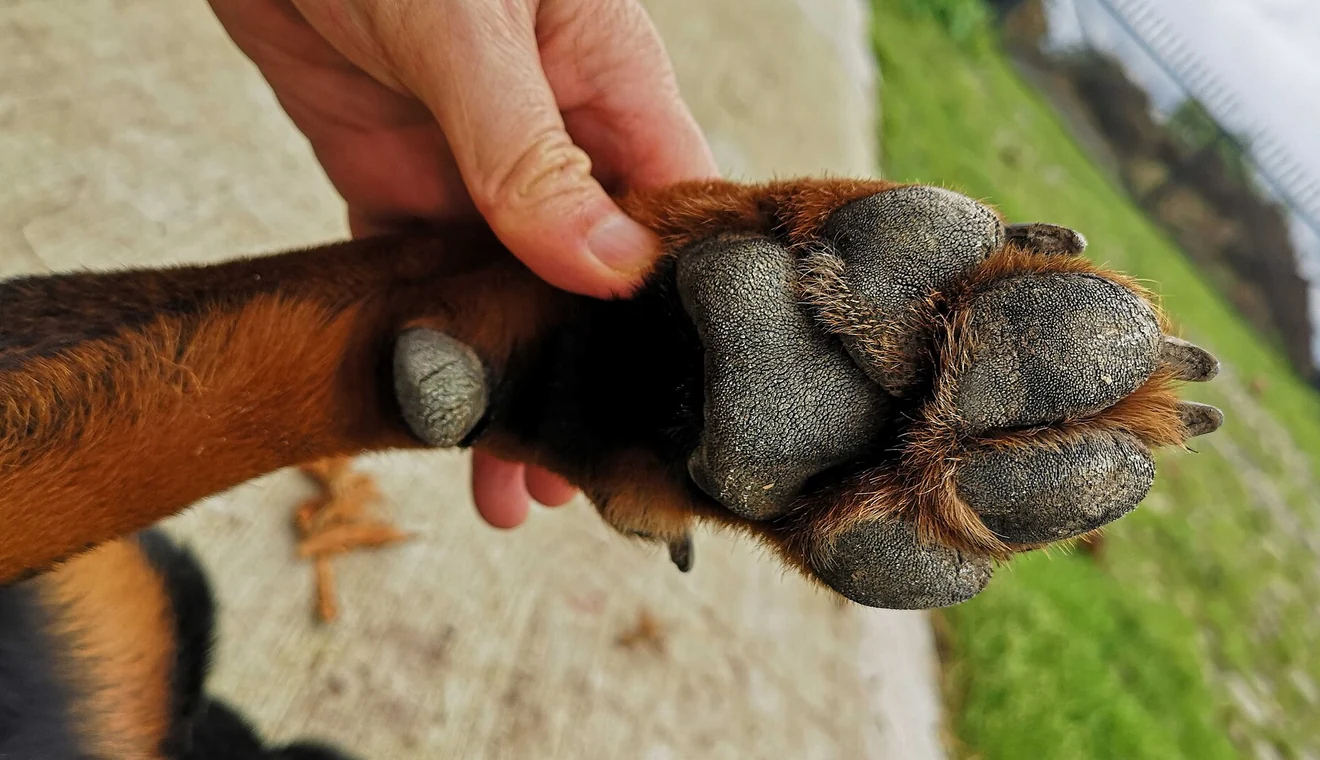
Grass seeds are a familiar summer problem for UK dogs, particularly those with fluffy feet and an enthusiasm for charging through fields. They're small enough to overlook, which is why noticing the change in your dog's behaviour matters.
What does a grass seed stuck in a paw look like?
You might see a pointed, straw-coloured seed head tangled in the hair between the toes. More often, once it has started to penetrate, all you notice is a red patch, a small hole, moist fur or a swelling between two toes. Some dogs limp, hold the foot up or repeatedly stop to nibble at it. Saliva can stain pale fur brown over time. A deeply embedded seed may not be visible at all, so a clear-looking paw doesn't rule one out.
If the paw is clear but your dog still favours one leg, see our front-leg limping guide for other causes and when to call the vet.
PDSA explains that the seed's shape helps it travel into tissue and that it can cause infection or an abscess as it moves. A wound that repeatedly heals and opens again can be a warning sign of a retained foreign body.
Why grass seeds cause trouble
Not every blade of grass is dangerous. The concern is mainly the dry seed heads with sharp points and backward-facing bristles. These can catch in a dog's coat, then move towards the skin as the dog walks. Once beneath the surface, they can be awkward to locate and may cause ongoing pain. Dogs with thick hair between their pads may hide seeds for longer, but short-haired dogs can be affected as well.
The problem isn't simply that the seed is dirty. A barbed foreign object can keep irritating tissue even if the surface is cleaned. That's why a suspected embedded seed deserves proper examination rather than a week of repeated antiseptic wipes.
Checking your dog after a walk
Let your dog stand somewhere well lit and gently lift one paw at a time. Part the hair between each toe, check the undersides and inspect around the pads and nails. Look and feel for loose plant material, tenderness, warmth or anything your dog finds painful. Don't forget the other feet, armpits, ears and eyes; PDSA notes that grass seeds can enter several parts of the body.
If a loose seed is caught in hair and clearly hasn't pierced skin, gently remove it and check for others. Stop if the dog pulls away or you can't see where it ends. Our dog grooming at home guide covers building a calm routine for paw handling, which is useful before a problem appears.
When can you remove a grass seed yourself?
Only when it is visibly loose in the coat and can be lifted away easily without touching a wound. Blue Cross makes that distinction: removing seeds before they enter skin is preventive grooming; trying to extract one that has burrowed in is veterinary work.
Do not cut into the paw, squeeze a lump, probe a tiny hole with tweezers or try to pull out a seed whose tip disappears into skin. These attempts can break the material, increase inflammation and make a frightened dog resist future examinations. If you're not sure whether the seed is attached, photograph what you can see and ask the vet.
When to contact a vet
Arrange veterinary advice promptly when you suspect a seed has entered the paw, or when your dog is persistently licking, limping or has swelling between the toes. If the paw is bleeding heavily, the dog cannot bear weight or is clearly in severe pain, seek urgent help. Do not delay because the animal still runs around enthusiastically; dogs can mask discomfort.
A basic pet emergency kit can help with safe first aid while arranging veterinary care, but cannot remove a grass seed embedded in skin.
Give the clinic a useful history: where you walked, when the licking started, which foot is affected and whether you've seen a seed or wound. Mention any previous treatment or antibiotics. If the dog has recently been in long grass and also has a painful eye or is shaking its head, tell the vet about that too.
What the vet may do
A vet will examine the paw and may clip a small area of hair to see the skin properly. A superficial seed may be removable with suitable instruments, but deeper ones sometimes require sedation, an operation or further investigation. PDSA warns that seeds do not reliably show up on ordinary X-rays, so a normal-looking image isn't necessarily the end of the investigation. The examination and treatment depend on the location and the dog's discomfort.
If an abscess has formed, the vet will decide how to manage the wound, pain and any infection. Don't assume antibiotics alone remove the cause. A foreign body that remains in tissue can allow trouble to return after temporary improvement.
How to care for the paw while awaiting advice
Keep your dog from repeatedly chewing the affected area, using a properly fitted protective collar if recommended and tolerated. Restrict rough running and keep the paw reasonably clean and dry. Don't soak it in strong household disinfectants, apply essential oils or bandage tightly without instruction. A dressing can trap moisture or pressure a swollen paw if used incorrectly.
If your dog is already taking prescribed medication, follow the directions and ask the practice before adding anything. Our dog itchy paws guide covers other reasons dogs lick their feet, such as skin irritation; the location and sudden timing after grassland exposure make a seed worth checking.
Recovery and warning signs after treatment
Your vet may ask you to prevent licking, administer medication and return for a wound check. Follow the plan even if the dog seems cheerful the next morning. Watch for renewed swelling, heat, discharge, a limp or repeated licking of exactly the same spot. These signs can mean healing isn't progressing as expected and warrant a call to the practice.
Don't pull stitches or dressings off because the skin looks better. If the paw becomes very swollen, bleeding restarts or your dog stops using the leg, contact the vet promptly. Healing times vary depending on whether the seed was found near the surface or deeper in tissue.
Preventing the next problem
Check feet and other vulnerable areas after walks through long or dry grass, especially in summer. Keeping excessive hair around the toes tidy can make inspections easier, but avoid cutting close to delicate skin. If a particular field repeatedly causes trouble, choose a different route while seed heads are plentiful. Don't rely on socks or paw boots alone: they can rub, overheat and come off.
Other outdoor hazards can produce similar paw licking. Our dog tick removal guide explains how to check for an attached tick and why the removal method differs. Inspect the animal itself, not only the path you've taken.
A simple rule for owners
A seed loose in fur can be removed as part of normal grooming. A seed inside skin, a swollen gap between toes or a persistent painful paw calls for veterinary assessment. Keep the dog comfortable, avoid digging and explain the walk history to the clinic. The sooner the actual cause is found, the easier it generally is to avoid the cycle of pain, licking and recurring wounds.
Sources and further reading
- PDSA: Grass seeds in dogs — where seeds lodge, symptoms, investigations and treatment.
- Blue Cross: Grass seeds and dogs — distinguishing loose seeds from embedded ones and preventing injuries.