Hamster Bedding Depth: How Much Is Enough for Burrowing?
A hamster can spend most of the night moving bedding from one corner to another. That's not untidy behaviour; it is the animal trying to build the underground home it would use in the wild. A shallow layer scattered across a plastic cage floor leaves it with very little opportunity to do that.
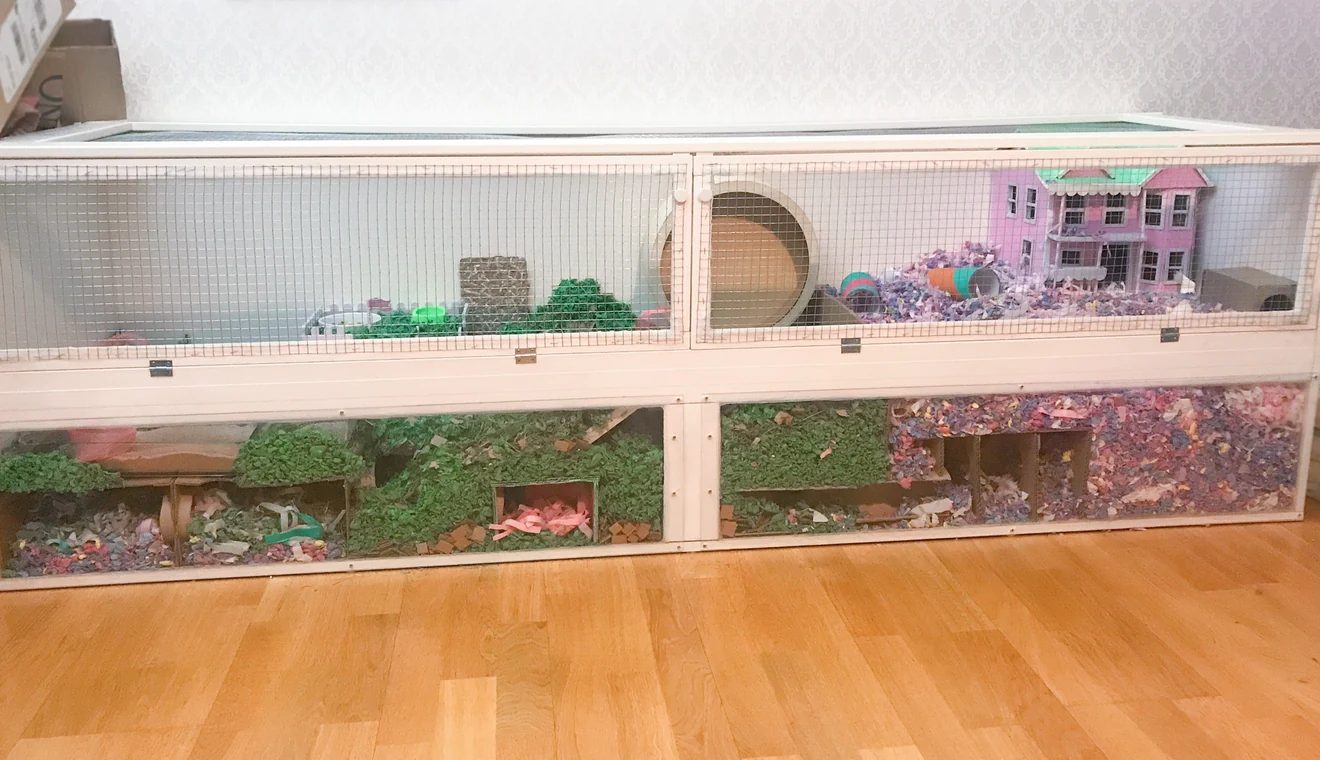
Woodgreen Pets Charity recommends at least 15 cm (six inches) of bedding over most of a hamster's enclosure, with a deeper area of around 25–30 cm (10–12 inches) for proper burrowing. These are useful minimum targets, not a reason to stop adding depth when the enclosure can safely accommodate more.
Why do hamsters need deep bedding?
Hamsters naturally dig tunnels and nesting chambers. A secure burrow provides somewhere to sleep, store food and retreat from activity above ground.
That need doesn't disappear simply because the hamster was born in captivity. Woodgreen considers burrowing an important part of normal behaviour and recommends enough substrate to support it.
A hamster that sleeps in a little plastic hut may still benefit from an underground nest. The two options serve different needs.
Depth matters because a very shallow layer collapses when an animal tries to tunnel. A thick, stable substrate allows it to create a more complete network.
What depth does Woodgreen recommend?
Woodgreen sets out two practical levels in its hamster housing guide:
| Area | Recommended starting depth | Purpose |
|---|---|---|
| Most of the enclosure | At least 15 cm / six inches | General digging and movement |
| Dedicated deeper burrowing zone | 25–30 cm / 10–12 inches | Larger tunnels and nest chambers |
| Areas underneath heavy furniture | Stable supported surface | Avoid items falling into tunnels |
These amounts are guidance, not a calculation that converts directly into litres of bedding for every cage shape. Enclosure height, substrate compression and the hamster's body size all matter.
If your cage cannot hold that depth without the bedding spilling through bars or blocking safe ventilation, the cage design may be unsuitable. Read our Hamster Cage Size Guide before spending money on more accessories.
Is more bedding always better?
Greater depth can be helpful when it remains clean, stable and accessible. But stuffing an unsuitable cage right to the lid creates other problems.
The hamster still needs room to use its wheel properly, reach food and water, climb into a sand bath and move across the surface.
Plan the layout so a deep zone sits beside areas for a wheel and other equipment, without creating an unsafe drop or unstable edge.
Leave adequate clearance above the bedding and ensure there are no escape routes near the lid.
Which bedding holds hamster tunnels?
Woodgreen recommends suitable combinations of soft paper bedding, shredded cardboard, clean hay, non-fragranced hemp and some appropriate aspen products.
The exact material matters less than whether it is low in dust, safe for the animal and able to support a tunnel without constant collapse.
Soft paper bedding is popular because it can be packed into stable layers. Adding suitable hay between layers can sometimes strengthen the structure.
Avoid materials with strong added fragrances, unknown treatments or visible clouds of dust when poured. Small mammals have sensitive airways.
How to layer the substrate
Start with a clean enclosure and an appropriate bedding base. Add the chosen substrate in generous handfuls, spreading it across the designated digging area.
Compress it gently so tunnels can hold their shape, without packing it into a hard block. Some keepers alternate layers of suitable paper and hay.
Build up the deeper area gradually and make sure it does not cover vents, wheel mounts or access points.
Don't carve elaborate tunnels that need to stay exactly where you put them. The hamster should be free to redesign its own space.
If the substrate keeps collapsing or looks permanently wet, review the material and maintenance routine.
Heavy items must be supported from below
A ceramic hide, large glass sand bath or heavy wooden platform can be dangerous if it sits loose on top of a deep burrow.
A hamster may excavate underneath, allowing the object to fall onto it.
Woodgreen advises placing heavy accessories into the cage first, using stable supports, then adding the bedding around them.
Check that platforms cannot tip and that legs are positioned on a stable base rather than balanced on soft bedding.
Our Hamster Sand Bath Guide explains how to choose an appropriately sized low-dust sand container. A safe bath should not undermine a burrow roof.
What about sawdust and ordinary wood shavings?
Woodgreen specifically warns that sawdust and unsuitable wood shavings can cause skin and respiratory problems.
Not every packaged wood product has the same processing or dust content. However, the fact that a shop labels a bag “small animal bedding” does not make it ideal for deep hamster burrows.
If choosing an aspen or specialist product, check species suitability, dust extraction and whether it is actually capable of supporting burrowing.
Do not use fluffy cotton-wool nesting material or seed-pod fibres. Woodgreen warns that these can wrap around limbs and lead to serious digestive or pouch problems.
Bedding versus nesting material
Bedding is the main floor substrate. Nesting material is something the hamster can carry into its sleeping chamber.
Soft unscented tissue-type paper can provide nesting material. Offer it where the animal can collect and move it.
Avoid long-fibred fluffy products, scented paper or unknown craft materials.
A hamster may relocate its entire nest as temperatures and preferences change. Leave enough freedom to do that.
Do dwarf and Syrian hamsters need different depths?
Both Syrian and dwarf hamsters benefit from digging and a suitable deeper area. Woodgreen's general depth advice is relevant to keeping normal burrowing behaviour available.
Their enclosure needs can differ in terms of wheel size, shelters and other equipment, but don't assume a dwarf hamster needs only a thin layer because it is smaller.
A Syrian may create large tunnels or chambers, while a dwarf hamster may make a network of smaller passages. Individual behaviour varies.
If your pet avoids a particular substrate, consider whether it is uncomfortable, unstable or irritating rather than removing digging opportunities entirely.
How often should deep bedding be replaced?
Constantly emptying every handful of bedding destroys the hamster's familiar scent and established tunnels. That can create unnecessary stress.
Woodgreen advises daily spot cleaning and more substantial checks as needed, while preserving clean used bedding.
Remove wet areas, contaminated sand and spoiled fresh food promptly. Check food stores for perishables without dismantling every safe dry nest.
A deeper refresh may be necessary when the habitat becomes dirty, but don't replace clean bedding merely to make the cage look new.
Follow the charity's advice to retain suitable familiar materials during necessary cleaning.
Watch for wet or mouldy areas
Deep bedding can conceal spilled water or hidden perishable food. Make sure the bottle or water bowl is stable and cannot leak unnoticed into the substrate.
Inspect likely damp areas and the bottom of the enclosure during maintenance.
If substrate smells strongly of urine, stays wet or develops mould, remove the affected section and investigate the cause.
Good burrowing depth should be paired with appropriate ventilation, not a sealed plastic container that traps stale damp air.
Why an upright bar cage can be a poor choice
Many old-fashioned hamster cages have a shallow plastic tray and high wire sides. They may look spacious when judged by height, yet offer almost no room to establish a burrow.
Some people attach cardboard or acrylic barriers to hold deeper bedding. Those modifications must be secure, non-toxic, free of dangerous gaps and must not obstruct ventilation.
In some cases choosing a better enclosure is simpler and safer than modifying an unsuitable one.
Space for digging, a properly sized wheel and a meaningful floor area should be planned together.
Enrichment above the bedding
Deep substrate is important, but it isn't the whole home.
Add a suitable wheel, secure multi-chamber hide, safe chew objects and an appropriately sized sand bath, with open pathways for exploration.
Scatter some of the hamster's regular food allowance through clean bedding to encourage natural searching.
For additional low-cost activities, see our Hamster Enrichment Ideas. Don't fill the enclosure with objects that block every possible burrow entrance.
Common mistakes
Using only two centimetres of shavings
That doesn't provide meaningful tunnelling opportunities.
Putting a heavy ceramic item on a burrow
Support heavy objects securely from the enclosure base.
Using fluffy nesting fibre
Long fibres may wrap around limbs or be swallowed.
Changing all the bedding every weekend
Preserve clean familiar material when possible.
Ignoring damp areas under deep substrate
Check water leaks and soiled sections regularly.
Frequently asked questions
Is 10 cm of bedding enough?
It is below Woodgreen's general minimum of 15 cm, and well below the suggested 25–30 cm deep burrowing zone.
Can hamsters suffocate in deep bedding?
Properly chosen stable low-dust bedding with adequate ventilation supports normal burrowing. Avoid unsafe materials, collapses from heavy furniture and unventilated housing.
Does a dwarf hamster need deep bedding?
Yes. Small body size does not remove its natural digging behaviour.
Should I make tunnels for my hamster?
You can provide suitable starting structures, but allow the hamster to create and change its own burrows.
Build the home from the bottom up
Good hamster housing starts with the floor area and the bedding depth. Plan a stable deep burrowing zone before deciding how many toys to buy.
The result may not look perfectly tidy, but the hamster gets something much more valuable: a chance to build its own home.
Sources and further reading
- Woodgreen: How to Make Your Hamster Feel at Home — 15 cm general bedding, 25–30 cm digging area, materials, cleaning and heavy-item safety.
- Woodgreen: Caring for Hamsters — housing, nesting, natural behaviour and everyday care.