Leopard Gecko Heating: Warm Side, Cool Side and Night Temperatures
A leopard gecko needs a warm area where it can raise its body temperature and a cooler retreat where it can get away from the heat. It cannot control its internal temperature like a mammal. For a typical UK leopard gecko vivarium, the RSPCA gives a basking zone of 28–30°C and a cool end of 24–26°C, with separate hides so the animal doesn't have to choose between feeling safe and regulating its temperature.
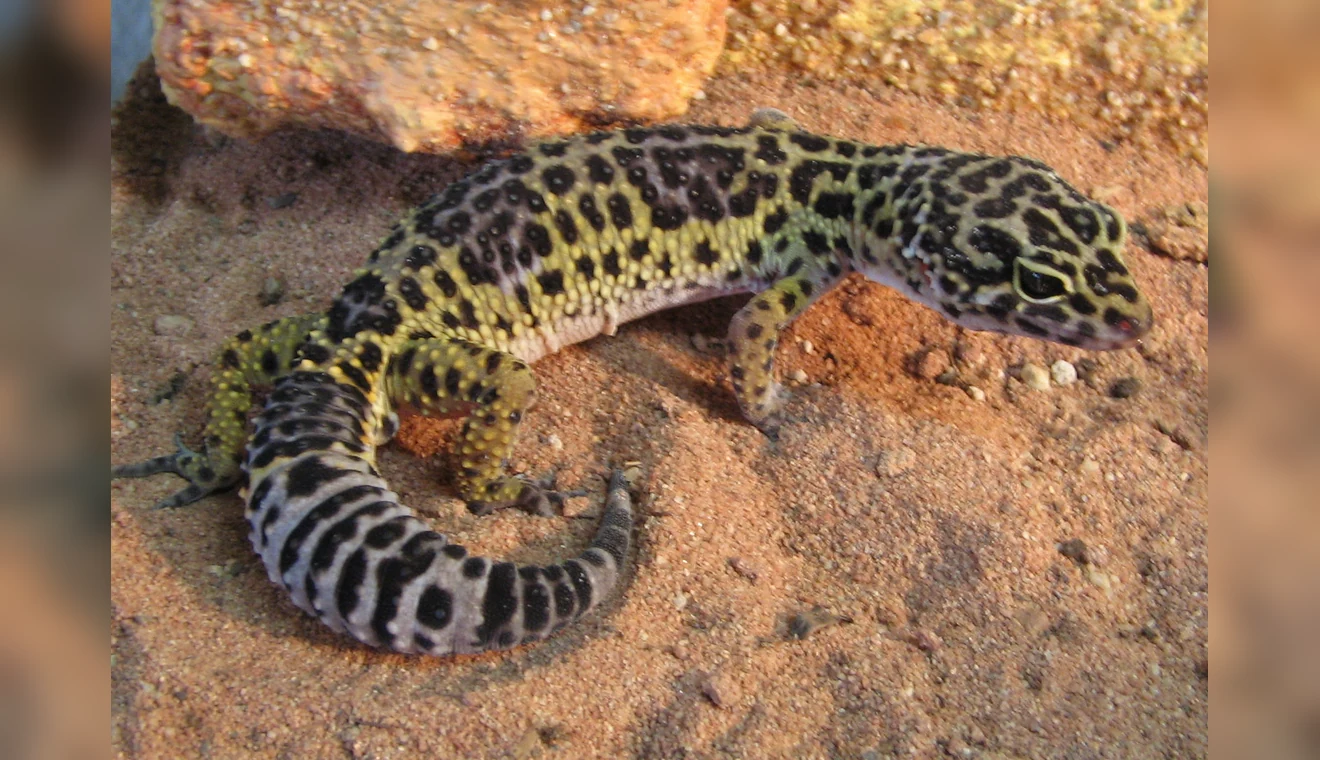
Heating should always be controlled by a suitable thermostat and checked with independent thermometers. Buying a bulb marketed for reptiles isn't enough if the heat reaching the gecko is wrong.
Leopard gecko temperature chart
| Location | RSPCA starting target |
|---|---|
| Daytime basking zone | 28–30°C |
| Daytime cooler end | 24–26°C |
| Night-time heating | Normally off if room remains at least 18°C |
| If room drops below 18°C | Supplementary controlled heat, e.g. 18–20°C air temperature with ceramic heater |
Those ranges reflect RSPCA husbandry guidance. They describe different areas and times; the whole vivarium should not be heated to one uniform number. Ask a reptile-experienced vet about special circumstances or animals recovering from illness.
Why you need a thermal gradient
Leopard geckos are ectotherms, meaning their environment provides the warmth needed for normal body processes. A gecko may choose to sit on a warm rock, retreat into a hide or move to a cooler place. Providing both choices lets it regulate behaviour and temperature.
Heating the entire enclosure to the basking temperature removes that choice. A tank that is too small to support separate zones may need an enclosure upgrade as well as a different lamp. Stable environmental conditions are a basic welfare requirement, not a decorative extra.
Heat lamps versus heat mats
RSPCA describes using a guarded overhead ceramic or basking lamp to warm one end of the enclosure, with natural slate or rock absorbing heat. Heat mats may be used in suitable circumstances, particularly when night-time heating is required, but they need appropriate placement and control.
No single product suits every enclosure. Glass, wood, insulation, room temperature and enclosure size affect how heat behaves. A heat mat beneath a thick substrate may not warm the intended surface evenly, while an unguarded lamp can burn a curious animal. Choose the system based on measured conditions, not a product photograph.
A thermostat isn't a thermometer
A thermostat regulates power to a heater according to its probe. It does not automatically tell you the exact temperature at the basking surface or the cool hide. The RSPCA recommends using digital thermometers at both ends and an infrared thermometer for checking surface temperatures.
Verify the readings daily, especially when you install new equipment or central heating changes the room. A thermostat set to 30°C may produce a different surface reading depending on the location of the sensor. Adjust gradually and confirm the result before leaving the setup unattended.
Where to place probes and thermometers
Follow the heater and thermostat manufacturer's instructions for the specific equipment. A basking lamp's dimming thermostat probe generally belongs near the substrate level in the warm zone as the RSPCA describes. Position the separate thermometer where you need to know what the gecko experiences.
Don't tape wires where the animal can become trapped or wrap around them. Check that a probe cannot be dislodged by climbing or cleaning. A loose sensor can leave a heater running incorrectly and create a dangerous hot spot.
How to build a comfortable warm hide
Provide a secure hide in the warmer zone and another on the cooler side. The gecko should not have to sit in full view to obtain appropriate warmth. A flat, stable natural stone can absorb heat beneath a basking lamp if placed safely.
Avoid sharp edges, unstable stacked rocks and surfaces that can overheat. A decorative cave that looks appealing to you isn't useful if its entrance traps the animal or its material becomes dangerously hot. Our leopard gecko substrate guide covers floor coverings and safe feeding areas.
What happens at night?
The RSPCA advises turning daytime heating off at night to allow a normal temperature drop where the room stays above about 18°C. If it falls lower, supplementary heating may be needed. A non-light-emitting ceramic heater can be regulated to maintain around 18–20°C in the air, or an appropriately fitted heat mat may be controlled separately.
Keep visible lights off during the dark period. Red or blue night bulbs are not a substitute for a genuine day-night cycle. Run the enclosure through real overnight conditions before bringing a gecko home, rather than discovering the winter low during the first week.
Does UVB affect heating requirements?
Heat and UVB do different jobs. A warm gecko can still lack adequate UVB, and an excellent UVB tube won't compensate for an inappropriate temperature gradient. RSPCA recommends suitable UV lighting to support vitamin D3 and calcium use, with shaded options and appropriate tube positioning.
Don't position lamps purely to create the brightest possible area; the animal also needs places to retreat. Check current product recommendations and ask a reptile vet about sensitive morphs. Ask your reptile vet how supplementation, appropriate UVB and measured heating work together to support healthy digestion.
What if your gecko stays in one hide all day?
Leopard geckos are most active around dawn and dusk, so resting during the day is normal. But a gecko that never uses the warm zone, loses weight or refuses food may have an unsuitable temperature, feel exposed or be unwell. Check actual readings and whether the hides are secure.
Don't repeatedly pull the animal out to place it under a lamp. That can increase stress and may not address the cause. Persistent changes in appetite, abnormal droppings or weakness warrant a reptile-veterinary assessment.
Avoiding burns and overheating
Guard heat sources so the gecko cannot touch them. Never operate a heat mat or lamp without a suitable thermostat. Check whether a rock or decoration holds excessive heat after the light has been on for several hours. Do not use household hot-water bottles, heat rocks without proper control or open heaters placed against the glass.
If you suspect a burn, contact a reptile vet promptly rather than applying human ointment. Skin injuries in reptiles may require specialist management. Safety matters more than maintaining the exact target number during an equipment failure.
Heating changes during a UK winter
The temperature of a spare bedroom can fall sharply overnight, even when its daytime reading is comfortable. Use a thermometer with a minimum-recording function if possible and check how the actual enclosure behaves. A small heater may struggle in a draughty location or overheat when central heating switches on.
Place the vivarium away from radiators and direct sun, not only to reduce temperature swings but to prevent unexpected overheating. Keep ventilation functioning. If the room is consistently too cold to maintain safe conditions economically, relocate the enclosure to a suitable space.
When should you seek veterinary advice?
Inactivity combined with marked weight loss, prolonged appetite refusal, constipation, muscle twitching, swollen limbs or abnormal behaviour may indicate illness. Poor heating and other husbandry errors are possibilities but should not be the only explanation considered.
Our leopard gecko shedding guide covers stuck skin and the role of a humid hide. A gecko with a tight retained shed around toes needs prompt specialist help, not simply more heat.
The practical setup sequence
Install a suitable guarded heater at one end, fit the correct thermostat, provide warm and cool hides, then use separate thermometers to verify the gradient. Check the genuine night-time low and set supplementary heat if needed. Run a new enclosure for at least a week before introduction, as RSPCA recommends.
Measure what the gecko actually experiences rather than trusting the number on the heater. Reliable choice and safety are the foundation of good leopard gecko heating.
Sources and further reading
- RSPCA: How to care for a leopard gecko — warm and cool gradients, thermostats and night heat.
- RSPCA: How to care for your bearded dragon — general safe reptile heat-source guarding and measurement principles; temperature values differ by species.