Royal Python Humidity: Safe Levels, Shedding and Moist Hides
A royal python sitting in a hide with dull skin may soon be preparing to shed. If its enclosure is too dry, the old skin can come away in pieces. But turning the whole habitat into a constantly wet box creates other problems.
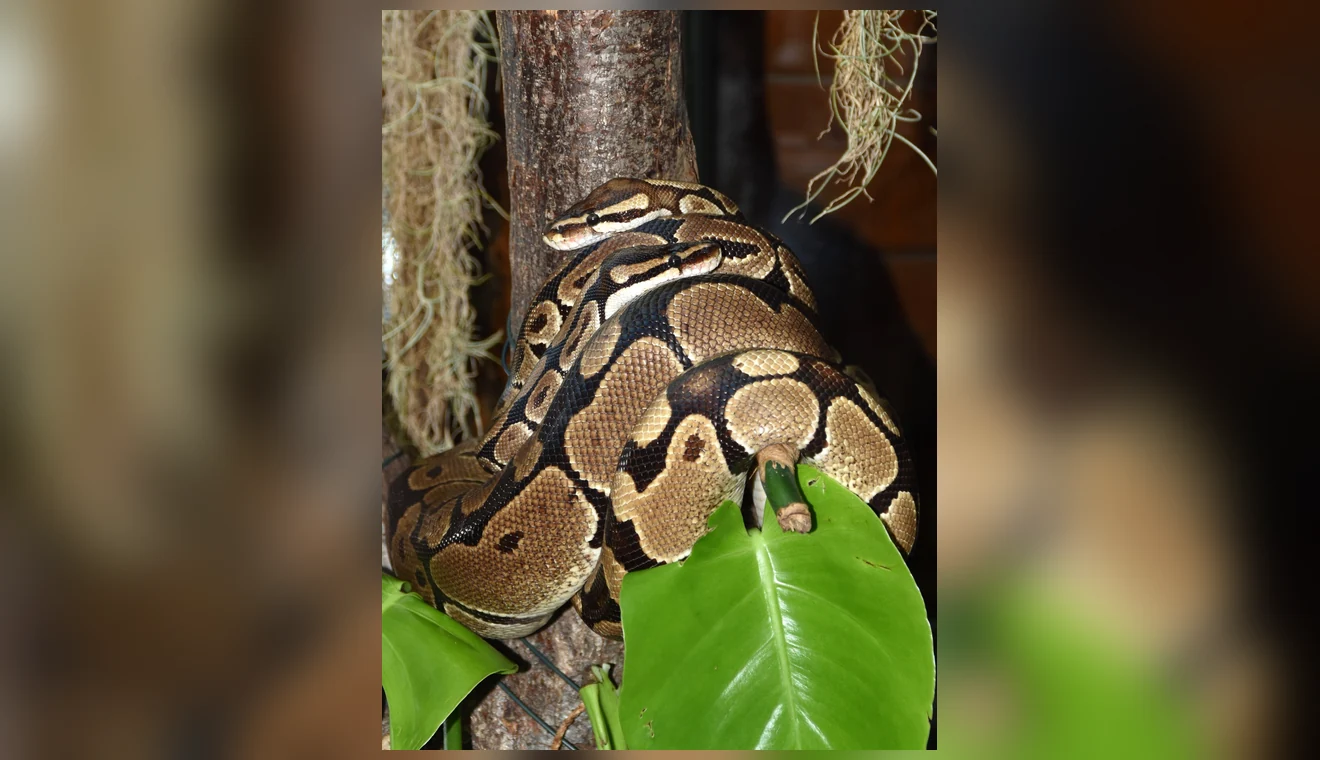
ReptiFiles recommends approximately 60–80% daytime humidity for royal pythons, also known as ball pythons, with natural nighttime rises. You should measure the enclosure accurately, use suitable moisture-retaining substrate and provide a secure humid retreat without leaving the snake sitting on permanently wet bedding.
How humid should a royal python enclosure be?
The royal python, Python regius, comes from parts of West and Central Africa where humidity varies between habitats and times of day.
ReptiFiles describes 60–80% by day, with nighttime humidity potentially reaching 80–100% in a suitable environment. That does not mean the enclosure must be soaking wet.
| Condition | Practical interpretation |
|---|---|
| Around 60–80% during the day | ReptiFiles' usual humidity guidance |
| Higher overnight | Can be part of natural daily variation |
| Humid hide | A more moist, optional retreat |
| Constant waterlogged substrate | A problem requiring correction |
| Frequent poor sheds | Review humidity, temperature and health |
ReptiFiles emphasises that occasional short departures from its target range are generally less important than prolonged unsuitable conditions.
Why humidity is important for shedding
A healthy snake normally sheds the outer layer of its skin in one largely continuous piece.
Humidity helps maintain appropriate hydration of the outer skin. Repeated incomplete sheds can indicate inadequate husbandry, dehydration or illness.
A snake may hide more and develop cloudy-looking eyes before shedding. Don't pull away the old skin or attempt to remove eye caps at home.
If retained skin persists or constricts the tail, contact a reptile-experienced vet.
Where should the hygrometer go?
Use a digital hygrometer with a probe placed in the middle area of the enclosure, following the instrument instructions. ReptiFiles specifically recommends measuring general humidity away from misleading extremes.
A second reading inside the humid hide can be useful when managing shedding.
Avoid assuming that a reading directly next to a water dish represents the entire enclosure.
Check the temperature too. Relative humidity rises as air cools, so the same environment may show different daytime and nighttime readings.
If the display behaves strangely, verify the probe and its placement before adding water.
Use substrate that holds moisture safely
ReptiFiles recommends a deep layer of appropriate moisture-retentive substrate—at least about 10 cm (four inches) in its guidance.
Materials used in suitable systems can hold moisture in their deeper layers while the surface stays comparatively dry.
Avoid overly dusty substrate, sharp particles and materials likely to mould. Do not keep a snake on saturated substrate.
Watering selected deeper areas may be more effective than constantly misting the whole enclosure. Check the drainage and ventilation of your particular vivarium.
The correct substrate should support movement, a clean surface and the overall humidity plan.
Set up a humid hide
Provide a secure snug hide that holds a more moist environment, using a suitable reptile-safe medium according to expert instructions.
It should be spacious enough for the whole snake, accessible and easily cleaned. The animal must also have other dry hides.
Check it regularly for mould, wet waste or trapped water. A humid hide is not a substitute for maintaining the main enclosure's appropriate humidity.
If the snake spends all day in one hide, examine temperature, security and available cover before assuming it only wants extra moisture.
How to raise humidity without making everything wet
Start with a reliable measurement. Then review substrate depth, available water, ventilation and how often the habitat dries out.
A properly sized water dish and moisture-retentive substrate may help stabilise conditions.
ReptiFiles describes adding water to the deeper substrate layers as one useful approach. Any changes should preserve a dry surface and appropriate airflow.
Don't block all ventilation with plastic wrap. A stagnant, overheated box with high humidity is not a healthy environment.
If your room air is exceptionally dry during UK central-heating season, an enclosure designed for proper humidity control may be more effective than endless spraying.
When is humidity too high?
A brief rise at night is not necessarily harmful. But persistently wet substrate, condensation, mould or a damp smell indicate problems.
The animal still needs ventilation and clean dry resting surfaces.
Check that water isn't collecting under heavy hides or at the base of the substrate.
If the snake has unusual respiratory noises, bubbles at the nostrils, open-mouth breathing or lethargy, seek reptile veterinary care promptly. Do not assume humidity alone caused the symptoms.
Temperature and humidity must be managed together
Royal pythons need a suitable warm-to-cool gradient as well as adequate moisture.
ReptiFiles lists a basking range around 30–32°C, with a cooler area generally in the 22–27°C range depending on the setup and time.
Do not lower heating deliberately just to raise relative humidity. Inadequate warmth can cause digestive and health problems.
Measure the basking surface, cooler ambient air and nighttime conditions using appropriate tools.
Our Corn Snake Temperature Guide discusses the general idea of a thermal gradient, but do not copy corn snake temperatures directly to a royal python.
What if the snake will not shed cleanly?
Review husbandry and water access first, including humid hide condition and accurate readings.
Do not use adhesive tape or pull at stuck eye caps. Attempting to remove retained eye scales can injure the eye.
Where necessary, an experienced reptile vet can determine whether skin needs treatment and whether infection or injury is involved.
Repeated poor sheds may be an early sign that the overall habitat needs improvement.
Does misting help?
Light misting may temporarily increase humidity, but frequent heavy spraying can leave the surface wet and the reading unstable.
A suitable substrate and enclosure that hold humidity predictably may be a better foundation.
If you use a mister, clean it and ensure any electrical equipment is safe from water exposure.
Never spray the snake forcibly or use scented additives in its water.
Water bowls and cleaning
Provide clean water in a sturdy accessible dish. Some snakes may soak occasionally, but repeated soaking can also indicate temperature, mites or husbandry problems.
Replace contaminated water and wash the dish routinely.
Remove wet waste promptly and check below hides. Moist substrate demands attentive cleaning.
A damp enclosure should not smell sour or mouldy.
Common humidity mistakes
Aiming for 40% because it suits a corn snake
Royal pythons need more humid conditions under current ReptiFiles guidance.
Leaving the whole substrate soaking
Maintain dry surface choices and adequate air exchange.
Measuring only inside the humid hide
You also need to know the general enclosure humidity.
Peeling off retained skin
You can injure the snake, especially around the eyes.
Ignoring the temperature gradient
Humidity is only one part of the habitat.
Frequently asked questions
Is 70% humidity good for a royal python?
It is within ReptiFiles' usual 60–80% daytime guidance, provided the enclosure has suitable airflow and dry surfaces.
Does humidity need to rise during shedding?
A properly maintained habitat and optional moist retreat should support normal shedding. Don't allow the whole enclosure to become waterlogged.
Can a royal python have a humid hide?
Yes, an accessible well-maintained moist retreat can be useful alongside dry hides.
Does nighttime humidity rise naturally?
Often, yes. Relative humidity can increase when temperatures fall.
Make humidity stable and give the snake choices
Aim for a suitable average humidity, secure humid and dry hides, and a proper heating gradient. Measure at useful locations and watch the snake's behaviour.
A hygrometer helps you manage the environment; the goal is a healthy animal, not hitting exactly the same percentage every hour.
Sources and further reading
- ReptiFiles: Ball Python Temperature and Humidity — daytime humidity, nighttime rise, substrate depth and humid retreats.
- ReptiFiles: Ball Python Care Guide — overall housing and temperature requirements.