Corn Snake Temperature: Basking, Cool End and Nighttime Heating
A corn snake needs warmth to digest food, but keeping its entire enclosure at one warm temperature takes away its ability to choose where it feels comfortable. A proper thermal gradient is one of the most important parts of its habitat.
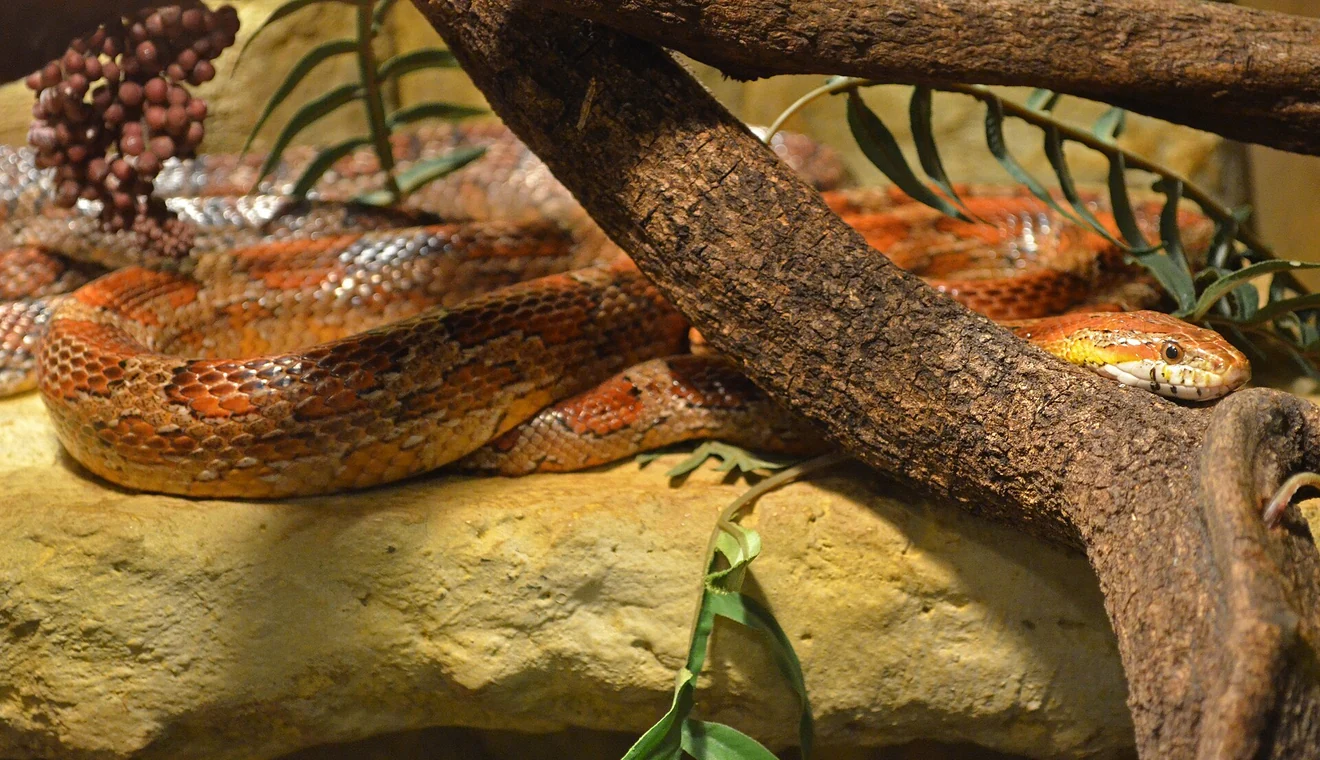
ReptiFiles recommends a basking surface around 32°C, with a cooler zone around 24–27°C for a typical healthy corn snake. Its current guidance allows nighttime cooling for many adults, while young hatchlings may need a different arrangement. These are species-specific starting points, not permission to guess the temperature from how warm the glass feels.
The same enclosure also needs measured moisture; our corn snake humidity guide explains the RSPCA's 40–50% range and humid hides.
Why does a corn snake need a temperature gradient?
Corn snakes are ectotherms: they depend on external warmth to regulate body temperature, metabolism and digestion.
In nature, a snake can move into sunshine, shade, a hollow log or a burrow. The enclosure should give it comparable choices.
Put controlled heat at one end and leave the opposite end cooler. Offer secure hides in both areas so a snake does not have to choose between thermal comfort and feeling safe.
A small box heated uniformly cannot provide a useful gradient, no matter how expensive the thermostat is.
What temperatures should you aim for?
ReptiFiles provides these general values for Pantherophis guttatus:
| Area | Temperature to check | Purpose |
|---|---|---|
| Basking surface | About 32°C | Warm location for thermoregulation |
| Cool zone | About 24–27°C | Retreat from heat |
| Nighttime for many adults | Normal suitable room temperatures, sometimes around 24°C | Natural nighttime reduction |
| Hatchlings younger than one year | May need more consistent nighttime warmth | Discuss age-specific plan with reptile specialist |
A surface temperature is not the same as air temperature. Measure both when checking the habitat. A basking rock can be much warmer than the surrounding air.
The exact arrangement should be adjusted to enclosure design, animal age and health.
Use a thermostat with any heat source
Heating equipment must be controlled appropriately. A heat lamp, ceramic emitter or mat without proper temperature regulation can overheat the animal or the enclosure.
Choose a thermostat suited to the type of heater and position its probe according to the equipment maker's instructions.
The probe must be secure where the snake cannot move it or bury it. A loose probe may cause the equipment to run unexpectedly.
Never let the animal contact an exposed hot bulb or heating element. Protective guards and safe fittings matter, especially in wooden or plastic enclosures.
How should you measure the basking surface?
An infrared temperature gun is useful for measuring an accessible solid basking surface. Use it properly and follow the manufacturer's limitations for reflective or unusual surfaces.
A digital probe thermometer provides ongoing measurements at chosen positions. Use separate instruments at warm and cool ends if possible.
Do not assume the thermostat's dial shows the exact surface temperature the snake experiences.
Check readings after the lights have been running long enough to reach their usual daytime state and again during the night.
Record temperatures whenever you change bulbs, room heating, vent covers or the enclosure layout.
Overhead heating versus heat mats
ReptiFiles favours effective overhead heat sources because they can provide warmth more similar to natural sunlight.
A properly installed basking lamp can create a local warm area and make it easy for the snake to move away.
Heat mats may be used in some specialist systems, but their contact and regulation risks require careful setup. Never position a heat mat where a snake can be trapped against an uncontrolled hot surface.
Don't put a lamp on an unstable lid or place a heat mat beneath a thick insulating layer without understanding the consequences.
For any unusual heating arrangement, ask a reputable reptile specialist or vet to inspect the plan.
Does a corn snake need heat at night?
ReptiFiles says most healthy adult corn snakes can tolerate an appropriate drop in temperature overnight and often do not need daytime-style heating once lights are off.
Hatchlings and sick animals may require different nighttime conditions. A UK spare bedroom that gets very cold is not automatically suitable because the guide mentions room temperature.
Check your actual night minimums, particularly in winter. If a controlled night heat source is needed, select a suitable non-light-emitting system and keep the species' natural day-night cycle.
Avoid leaving a bright red, blue or white heat bulb on all night. Darkness is part of normal environmental management.
Heat and UVB lighting are separate considerations
A corn snake needs suitable heat, visible light and a predictable daily light cycle. ReptiFiles also recommends appropriate low-level UVB as part of modern corn snake husbandry.
One ordinary heat bulb will not necessarily supply UVB. Conversely, many UVB tubes provide little usable heat.
Mount fixtures at the manufacturer's recommended distance and create both illuminated and shaded areas.
Never assume a window gives an indoor snake the UVB it needs: common glazing filters most relevant UVB.
How to check humidity without disturbing heat
Corn snakes also need an appropriate humidity gradient and access to a suitable humid retreat, especially during shedding.
Changing ventilation to raise humidity can also affect temperature. Make adjustments gradually and measure both.
Use suitable substrate that holds the intended conditions without leaving the whole enclosure wet.
Good-sized accommodation and furnishings make it possible to create a proper warm-to-cool gradient. For a different snake species, compare our Royal Python Humidity Guide—it shows why environmental recommendations must not be copied blindly between species.
Signs the enclosure may be too cold
A corn snake with inadequate warmth may become less active, refuse food or have trouble digesting. But those symptoms can also be caused by illness, stress, parasites and other issues.
Repeated regurgitation, breathing problems, injury or sustained refusal to feed need reptile veterinary advice. Do not fix apparent illness by simply turning up the thermostat.
Temperature readings are the starting point for investigating a problem, not a diagnosis.
If the heater has failed, repair the environment safely and avoid abrupt thermal extremes.
Signs the enclosure may be too hot
Persistent escape attempts, unusual activity away from the basking zone or a snake that cannot find cooler refuge may suggest environmental stress.
A dangerous hotspot can burn the animal even if the general air temperature seems acceptable.
Check heat-source guards, thermostat probe position and surface temperatures urgently if you suspect overheating.
Do not put the animal into cold water to “reset” its temperature. Seek specialist advice when illness or burns are possible.
Feeding and digestion
A snake generally uses suitable warmth after eating, which is another reason to preserve an accessible warm zone.
Avoid handling unnecessarily immediately after feeding and follow species-specific prey-size guidance.
Never feed a snake that is already cold, ill or unable to access the correct thermal environment without veterinary guidance.
If a snake regurgitates, don't immediately offer another meal. Contact a reptile-experienced vet and check the complete husbandry setup.
Common heating mistakes
Heating the entire vivarium to 32°C
That removes the cooler refuge the snake requires.
Trusting one thermometer at the warm end
You must know what is happening on the cooler side too.
Running an unregulated heat mat
Incorrect heating can cause serious burns.
Using bright night lamps
Maintain a suitable dark period and controlled nighttime temperatures.
Applying adult guidance to a hatchling
Young snakes may need additional warmth and monitoring.
Corn snake temperature questions
Is 25°C enough for a corn snake?
It can be within ReptiFiles' cooler-zone guidance, but the snake still needs a suitable warm basking area during the day.
Can I put a lamp at both ends?
That may eliminate the necessary gradient. Concentrate basking heat towards one end and measure the cool area.
Should I use a thermostat?
Yes, choose appropriate control for the actual heat source.
Can a corn snake live in a cold room?
Only when you can establish and maintain its required thermal environment, including safe night conditions.
Give your snake choices
A good corn snake enclosure is not hot everywhere. It offers a measured warm surface, a cooler retreat, appropriate nighttime conditions and safe hides throughout.
Test the environment before bringing the snake home and repeat those checks whenever the equipment or room changes.
Sources and further reading
- ReptiFiles: Corn Snake Temperatures and Humidity — 32°C basking target, cooler zone, nighttime guidance and heating equipment.
- ReptiFiles: Corn Snake Care Guide — wider husbandry, lighting and enclosure requirements.