Tortoise Table Setup: A Practical Indoor Home for Mediterranean Tortoises
A tortoise table can look like a simple wooden box, but the equipment inside it has to do several jobs at once. A young Hermann's tortoise needs somewhere warm to bask, somewhere cooler to retreat, safe soil to dig into and reliable ultraviolet light. Getting any one of these wrong can affect its health.
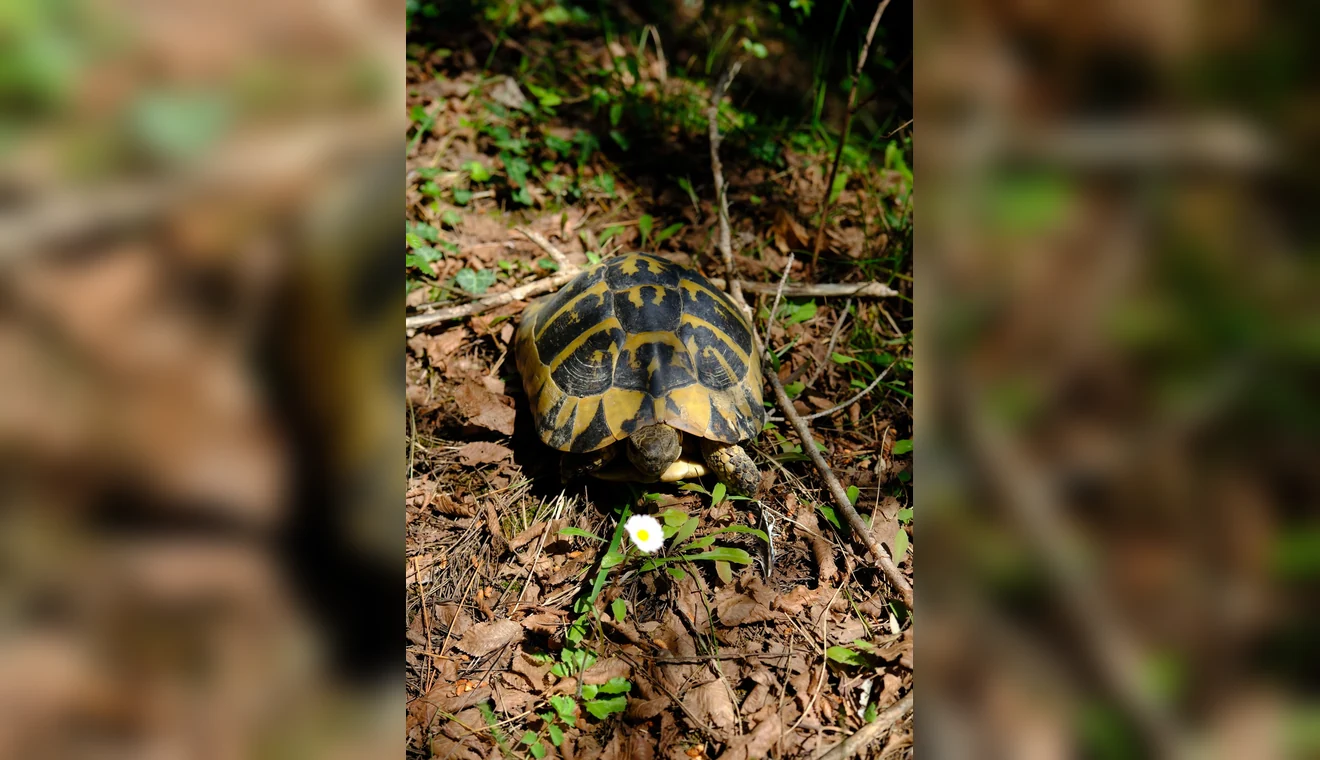
For commonly kept Mediterranean and Horsfield's tortoises, start with a large open-topped table, a proper heat gradient, species-appropriate UVB lighting, deep suitable substrate, shelter and a shallow water dish. This guide is about indoor housing for these largely dry-habitat species. Tropical forest tortoises have different humidity and enclosure requirements.
First check which tortoise you have
Hermann's, marginated, spur-thighed and Horsfield's tortoises are commonly grouped together in UK beginner advice, but they're not interchangeable. Adult size, digging habits, seasonal needs and preferred temperatures vary.
Identify the species accurately before purchasing equipment. Ask an experienced reptile vet or reputable tortoise organisation if the pet shop's label is uncertain.
The Tortoise Table provides indoor-housing guidance for hatchling and growing Mediterranean-type species. Its advice should not automatically be applied to tropical red-footed tortoises, which require a very different humidity arrangement.
A tortoise also needs appropriate outdoor space and natural sunshine when the climate permits; the indoor table is part of a full housing plan, not an excuse to keep an adult in a small box for life.
How big should a tortoise table be?
The Tortoise Table suggests about 91 × 61 cm (3 × 2 feet) as a minimum for a hatchling, and says a juvenile needs more. That is emphatically not an adult-sized permanent enclosure.
For a medium adult Mediterranean tortoise, Norfolk Tortoise Club recommends an outdoor enclosure around 3 × 3 metres, along with at least 1 × 1 metre of heated indoor accommodation for temporary bad-weather or overnight use.
Think in terms of usable ground area. Tortoises walk, forage, dig and explore; a tall enclosure with shelves doesn't replace a generous floor.
Measure the internal dimensions after installing hides, feeding areas and other features. A table that looks large when empty can become crowded after equipment is added.
Where to put the table in a UK home
Choose a secure, level surface in a quiet area, away from direct window sunlight, radiators, open doors and strong draughts.
Direct sunlight through glass can overheat an enclosure quickly even though it doesn't provide the same UVB as unobstructed natural sun.
The table needs a safe power supply for the lighting and heating equipment. Keep cables out of reach of the tortoise and protect connections from spilled water.
Dogs and cats must not be able to get into the enclosure. A sturdy ventilated mesh cover may be necessary in a household with other animals or young children.
Open top or enclosed vivarium?
For the Mediterranean-type species covered here, The Tortoise Table recommends an open-topped tortoise table because it provides ventilation and a useful temperature gradient.
An enclosed vivarium may trap humidity and make thermal management more difficult in some designs. However, you should not turn that into a universal claim for every tortoise species: humidity-loving tropical species may benefit from different enclosures.
If you build your own, check finishes and adhesives, prevent escapes and make the sides high enough above the substrate that the tortoise cannot climb over.
A clear plastic lid placed on top to keep heat in is not a safe shortcut to a properly designed habitat.
Create a warm end and a cool end
A tortoise needs to choose its body temperature by moving between areas. Place the basking heat source at one end of the table, not in the centre.
The Tortoise Table gives a starting basking reading of approximately 30°C at the top-of-shell height for its Mediterranean beginner setup and a cooler end around 20°C, while the Tortoise Trust discusses higher basking temperatures for some Mediterranean species and wider gradients.
The correct target therefore depends on species, age and lamp arrangement. Have an experienced reptile keeper or vet verify the planned gradient.
Measure beneath the lamp at the height of the top of the animal's shell. A thermometer stuck to the far wall isn't measuring the basking surface.
Make sure the tortoise can walk completely out of the warm area whenever it chooses.
UVB is not the same thing as heat
UVB helps tortoises synthesise vitamin D3, supporting calcium metabolism and shell and bone health. An ordinary household bulb or warm heat lamp does not automatically provide suitable UVB.
Use a reptile-rated UVB system chosen for your tortoise species and the measured distance between lamp and shell. Follow the equipment maker's installation guidance.
A separate reflector heat bulb and appropriate UVB tube are common arrangements. Some specialist combined systems provide both, but they must be installed correctly.
Our Tortoise UVB Lighting Guide explains lamp strength, reflectors, mounting distance and why UVB output declines before the bulb stops glowing.
Give the animal somewhere to dig
Suitable substrate should support normal digging and scraping. Veterinary guidance for Mediterranean tortoises describes at least 5 cm of appropriate substrate for burrowing behaviour, with more depth in areas suited to the species and setup.
A suitable loamy topsoil mixture is often used. Avoid treated garden products, sharp materials and substrates that become excessively dusty or stay waterlogged.
Don't assume every soil-and-sand recipe is suitable for every species or age. The animal's digging behaviour, ventilation and moisture levels all matter.
Place heavy hides directly on stable supports rather than loose substrate where a burrowing tortoise could undermine them.
Hides, shade and a water dish
Provide a secure hide away from the hottest spot, and preferably choices of cover in more than one area of the table.
Use a shallow sturdy water dish with easy entry and exit. Clean and refill it regularly so the tortoise always has access to suitable drinking water.
Suitable edible plants and safe décor can add interest, but don't use unknown houseplants or pesticide-treated cuttings. Check any stones or logs for tipping and trapping hazards.
The animal should be able to turn, walk and retreat without being forced past hot equipment.
How to set up before the tortoise arrives
- Confirm the tortoise species and eventual adult housing needs.
- Choose a generously sized secure table, not the smallest advertised starter kit.
- Position it away from direct sun, draughts, children and other pets.
- Add suitable substrate, a stable hide and a shallow water dish.
- Install species-appropriate heating at one end.
- Install UVB lighting using the manufacturer’s correct reflector and distance guidance.
- Measure warm and cool temperatures at tortoise shell level.
- Run the system long enough to assess day and night conditions before moving an animal in.
- Arrange a reptile-vet contact and appropriate outdoor housing plans.
This preparation is more important than decorative fake plants or an elaborate painted background.
Outdoor access is part of the long-term plan
When safe weather permits, suitable Mediterranean tortoises benefit from unfiltered natural sunlight in a secure outdoor enclosure.
That enclosure needs dry, well-drained ground, shelter, shade, safe forage plants and protection from dogs, foxes, rats and birds. Unsupervised garden roaming is not a secure alternative.
Our Tortoise UVB Lighting Guide explains why sunshine through a closed window cannot replace correct exposure outdoors.
Don't move a tortoise suddenly into cold, wet conditions because it looks sunny from inside the house.
Common setup mistakes
Buying a 3 × 2-foot table for an adult
That figure is for hatchlings in the source guidance. Adults require substantially more space.
Putting heat in the centre
The tortoise needs distinct warm and cool areas.
Assuming window sunshine supplies UVB
Glass normally blocks the UVB the tortoise needs.
Positioning a lamp by guesswork
Measure at shell height and follow the exact bulb's distance guidance.
Using damp, mouldy or chemically treated substrate
Choose suitable materials and monitor hygiene and moisture.
Forgetting predator protection
Even familiar family pets can seriously injure a tortoise.
Frequently asked questions
Do I need both UVB and a heat lamp?
Yes, tortoises need suitable UVB exposure and appropriate basking warmth. Some specialist equipment combines the two, but most setups use separate systems.
Can a tortoise live on newspaper?
A flat paper surface does not offer the normal digging opportunities expected in a suitable tortoise setup.
Is a wooden table safe?
It can be, if large enough, securely built, treated with pet-safe materials and protected against moisture and climbing escapes.
Can I put two tortoises together?
Don't assume companionship improves welfare. Tortoises can compete and bully; species, sex and space need specialist assessment.
Set up the habitat before buying the tortoise
The essentials are straightforward to list, but they need testing: ground space, a measured thermal gradient, reliable UVB, digging substrate, cover, water and a secure outdoor plan.
Buy the right environment first. It's cheaper and safer than trying to rebuild a tiny starter enclosure after the animal has already moved in.
Sources and further reading
- The Tortoise Table: Indoor Housing — open tables, hatchling minimum, heat and UVB installation.
- Norfolk Tortoise Club: Enclosure Inspiration — adult Mediterranean outdoor and temporary indoor housing.
- Tortoise Trust: Taking Care of Pet Tortoises — secure outdoor habitat, drainage and predator protection.