Tortoise UVB Lighting: Lamps, Distance and Daily Schedule
The bulb over a tortoise table may look bright and feel warm, but neither brightness nor heat tells you whether it is supplying enough ultraviolet B radiation.
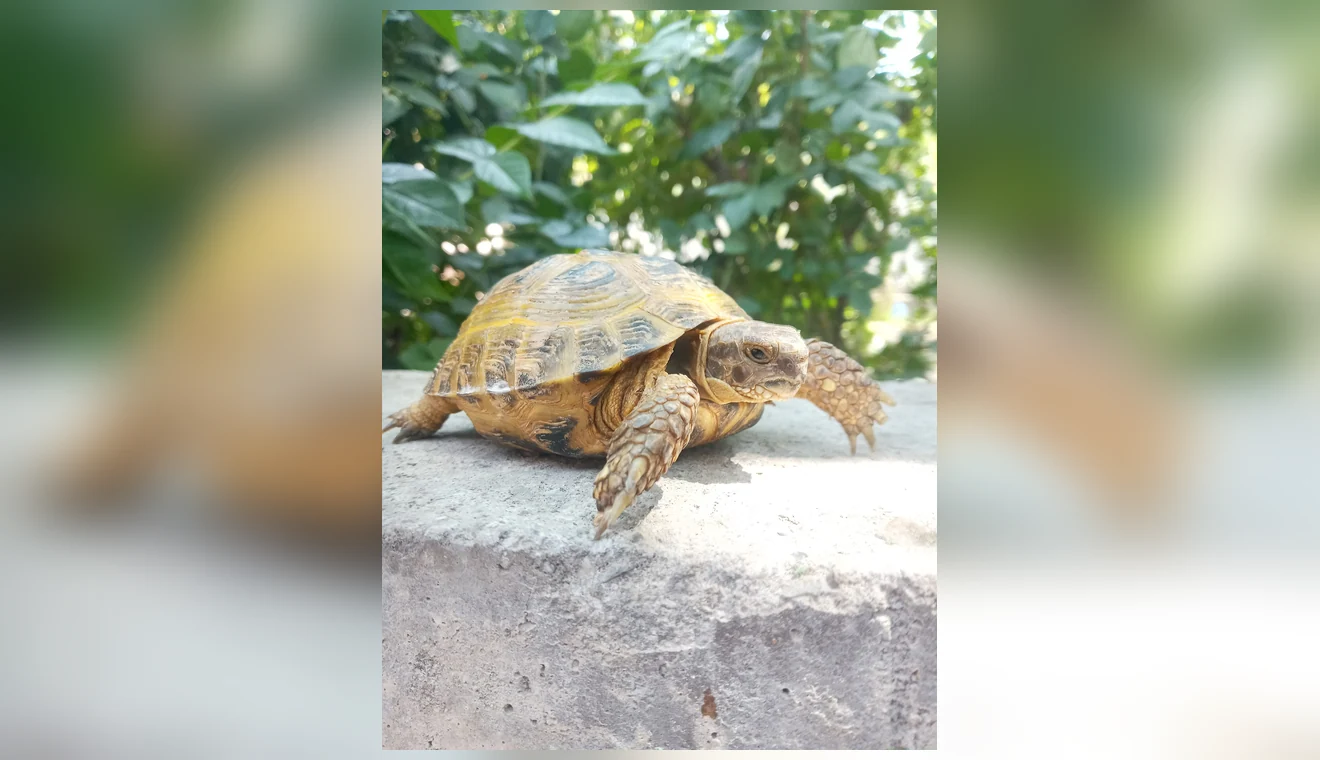
UVB lighting is part of calcium and vitamin D3 husbandry for indoor tortoises. The right installation depends on the species, lamp type, reflector, distance, mesh and where the animal actually spends its time.
This guide focuses on the practical lighting questions for commonly kept Mediterranean-type tortoises in the UK. Tropical species and unusual setups need their own specification.
Why do tortoises need UVB?
UVB enables appropriate vitamin D3 production, which is involved in absorbing and using calcium for healthy bones and shell development.
Poor UVB exposure combined with an unsuitable diet and environment can contribute to metabolic bone disease. A lamp is not a cure-all: calcium intake, suitable temperatures, hydration and veterinary care remain important.
The Tortoise Table explains that natural sunshine is an important UVB source, while artificial reptile lamps are necessary during indoor housing when suitable outdoor exposure is unavailable.
Ordinary heat bulbs, room lights and daylight through closed windows are not reliable UVB sources.
UVB light and basking heat do different jobs
A tortoise uses heat to become active and digest food. UVB supports vitamin D3 metabolism. Some reptile products combine both functions, but many lamps supply only one.
| Equipment | Main role | Key limitation |
|---|---|---|
| Reptile-rated T5 UVB tube with reflector | UVB over a chosen area | Typically does not provide sufficient basking heat |
| Suitable basking heat lamp | Warms the basking area | Usually does not provide UVB |
| Specialist combined heat/UVB bulb | Both functions in one lamp | Position, lamp model and temperature must all be correct |
| LED daylight lamp | Visible brightness | Not a substitute for a UVB lamp |
| Sunlight through normal window glass | Light and warmth | Most useful UVB is filtered out |
Never guess that a product supplies UVB because the box says “full spectrum”. Read the actual technical specification.
What strength UVB bulb should you buy?
There is no reliable universal answer such as “every tortoise needs 12%” regardless of distance.
The Tortoise Table discusses 10–12% fluorescent UVB tubes for certain Mediterranean setups, but the amount reaching the tortoise depends on the bulb design, reflector, installation height and any mesh.
For species-specific modern UV guidance, ReptiFiles emphasises measuring the UV Index (UVI) at the animal's basking height, not choosing solely by a percentage printed on the box.
A UVI target appropriate to the species should be checked against a competent reptile-vet or evidence-based care guide. Do not use a tropical forest tortoise's requirements for a Horsfield's tortoise simply because both are sold as pets.
How far above the tortoise should the UVB lamp sit?
Follow the exact manufacturer's instructions for that model and fitting. Different lamps can have substantially different safe mounting distances.
Measure from the lamp to the top of the tortoise's shell when it is in its normal basking position, not from the enclosure floor.
A large rock or basking platform can shorten that distance considerably. A mesh cover may also reduce the UVB reaching the animal.
A reflector alters output and direction, so the distance for an unreflected lamp cannot automatically be reused with a powerful reflector.
If you can't confidently achieve the correct exposure at a safe distance, ask a specialist for help before housing the tortoise.
Why a UV meter can be useful
A suitable UV Index meter, such as a reptile-care appropriate meter, helps assess actual exposure at the height where the animal basks.
It's especially useful where there is a mesh lid, unusual mounting arrangement, long fixture or large enclosure.
Testing should take account of warmed-up lamps and stable positioning under normal operating conditions. Follow the meter's instructions and the manufacturer's safety guidance.
A visible-light meter or ordinary room thermometer cannot tell you the UV Index.
If you lack suitable measuring equipment, choose a reputable complete lamp/reflector system with a published manufacturer distance chart and have the arrangement checked by an experienced reptile specialist.
Where should UVB sit in the enclosure?
For a Mediterranean tortoise, the main UVB area is commonly arranged near the warm basking zone so the animal can bask naturally.
It also needs places to move out of direct UVB, including a sheltered hide and a cooler zone. Constant unavoidable exposure is not the aim.
The Tortoise Table recommends lamps positioned above the habitat rather than angled into the tortoise's eyes.
Secure fixtures firmly. A lamp falling into substrate or contacting wood can cause burns or a fire.
Our Tortoise Table Setup Guide covers how to position heat, hides and ground-level features together.
How many hours a day should a tortoise have UVB?
The Tortoise Table recommends artificial UVB lighting for about 12 hours a day in its Mediterranean-type indoor setup.
A timer can create a predictable day/night cycle. Many keepers adjust lighting seasonally, but any changes should suit the species and overall husbandry plan.
At night, the animal needs proper darkness. Don't leave a bright or coloured heat lamp running simply because you worry it will be cold.
Night-time temperature requirements depend on species and housing. If extra overnight warmth is genuinely needed, ask about an appropriate non-light-emitting controlled heat source.
How often should UVB bulbs be replaced?
A bulb can still glow visibly long after its useful UVB output has declined.
The manufacturer should specify an effective service life for the model and fitting. Some lamp types have shorter recommended intervals than others.
Record installation dates and check output when possible. Don't assume that a tube lasting twelve months physically still provides the correct UVB after twelve months.
Clean reflectors and equipment as instructed, but always disconnect power and allow fixtures to cool before maintenance.
A weakened or incorrectly mounted lamp shouldn't be compensated for by moving it dangerously close to the shell.
Is natural sunshine better than artificial UVB?
Unfiltered appropriate sunlight outdoors provides a natural mix of UVB, heat and visible light. Mediterranean tortoises often benefit from secure outdoor access when UK weather permits.
But outdoor exposure must be safe. The enclosure needs shade, escape prevention, predator protection and dry shelter. A tortoise should never be left in a sealed glass tank in the sun.
Normal window glass and many transparent plastics filter UVB. Sitting a tortoise beside a closed conservatory window is not equivalent to secure outdoor exposure.
Even with outdoor access, a UK tortoise may require proper artificial UVB during indoor periods.
What about calcium supplements?
Adequate calcium and vitamin D3 husbandry work together. UVB alone does not make an inappropriate diet suitable.
Provide species-appropriate edible plants and supplementation according to reputable tortoise care guidance and reptile veterinary advice.
Avoid indiscriminately combining several vitamin D3 supplements with intense UVB exposure. Too much supplementation can also be harmful.
Shell softness, abnormal growth, weakness or loss of appetite needs an experienced reptile vet rather than simply a stronger bulb.
Common UVB mistakes
Buying an ordinary daylight bulb
Visible brightness doesn't prove useful UVB output.
Installing 12% UVB at any distance
The percentage is not a complete exposure specification.
Placing lamps through glass
Glass normally prevents adequate UVB delivery.
Measuring to the substrate instead of the shell
A raised basking platform changes the distance.
Leaving lighting on 24 hours
Tortoises need a suitable day/night cycle.
Keeping an old bulb just because it glows
UVB output can decline while visible light remains.
Frequently asked questions
Do tortoises need a UVB lamp indoors?
For most commonly kept day-active Mediterranean tortoises, yes. A properly designed indoor system includes suitable UVB and heat.
Can UVB be too strong?
Yes. Overexposure and inadequate distance can cause harm. Follow species-specific UVI and manufacturer guidance.
Will a heat lamp provide UVB?
Only if the specific product is designed and verified to do so. Most simple basking bulbs don't.
Does a mesh cover block UVB?
It can reduce output, depending on the mesh and fixture. Follow lamp distance charts and measure when possible.
Make exposure measurable and predictable
Choose the system for your tortoise's species, mount it at a verified distance and create a proper basking zone with a retreat.
A UVB lamp is not simply another decoration above the table. Its placement, output and replacement schedule are part of the animal's daily care.
Sources and further reading
- The Tortoise Table: Indoor Housing — UVB, heat, mounting and 12-hour photoperiod in Mediterranean-type indoor setups.
- ReptiFiles: Russian Tortoise Care Sheet — species-specific UVI, distance and fixtures.
- Tortoise Protection Group: Baby Tortoise Setup — UVB and basking heat for indoor tortoise housing.