Cat Overgrooming: Causes, Bald Patches and When to See a Vet
Most cats devote a noticeable part of the day to washing. A quick lick after food or a long grooming session before sleep is perfectly ordinary. Overgrooming is different: repeated licking, biting or pulling at fur may leave thinning hair, bald areas or sore skin. Sometimes the cat is itchy; sometimes it is painful or stressed. You cannot tell which from a bald patch alone.
Scratching mainly around the ears, especially with dark debris, may need a different assessment; see cat ear mites and other ear causes.
Cats Protection recommends veterinary assessment when grooming produces hair loss or sores. Treating it as a bad habit before checking for physical causes can delay care and leave the cat uncomfortable.
What does normal grooming look like?
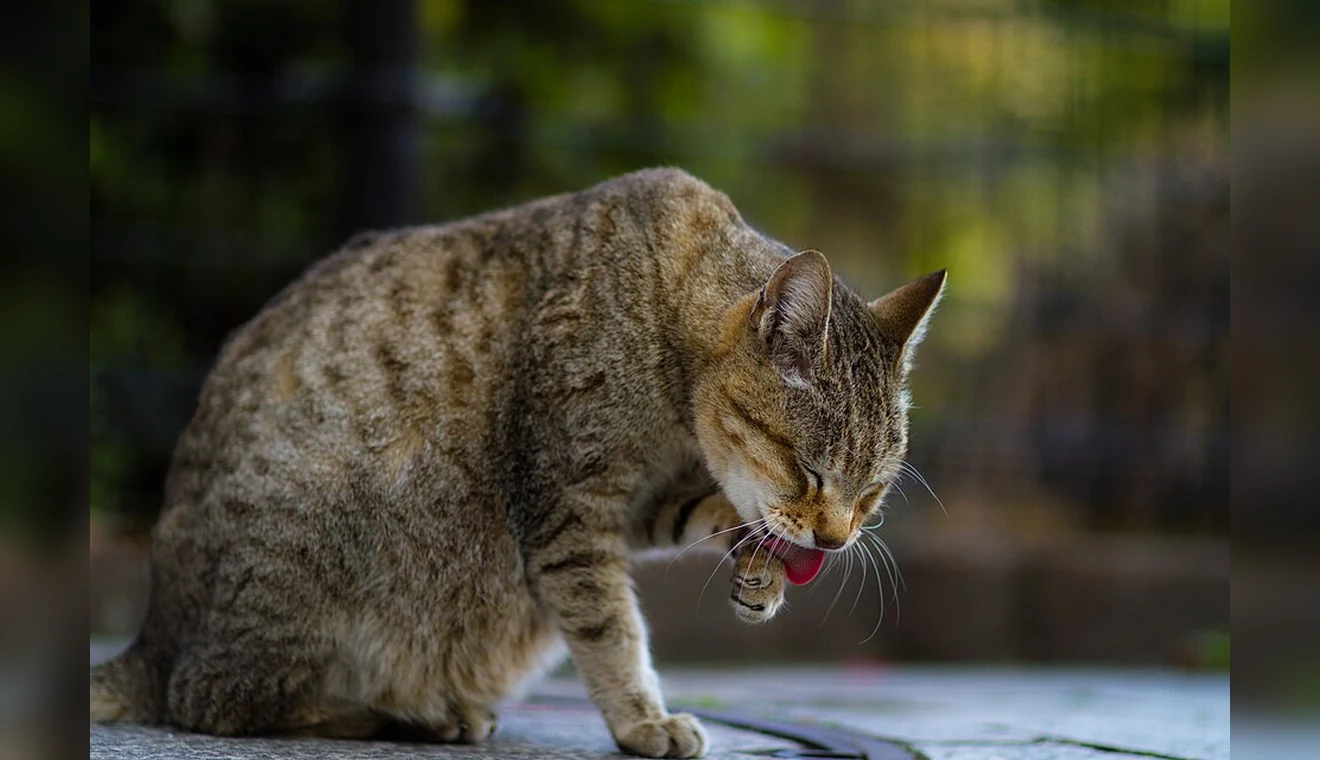
A healthy cat uses its tongue and paws to keep the coat clean, redistribute oils and remove loose hairs. It may groom after eating, waking or being handled. Hair length, age and season affect how much attention the coat needs. Some cats are particularly meticulous. The concern is a new or persistent change, especially if grooming interrupts sleep or play, seems frantic, or causes redness, missing hair or visible wounds.
Signs a cat may be overgrooming
Look for short, broken hairs, bald patches on the belly or inner legs, repeated licking of the same spot and wet fur that never seems to dry. Some cats bite their coat or pluck tufts; others groom secretly when the room is quiet. Watch for scabs, dandruff, irritated skin and changes in behaviour. Take photos of affected areas over several days to help your vet assess progression without provoking another episode.
A cat that suddenly resists stroking may be uncomfortable rather than aggressive; see why cats bite when stroked for body-language and pain considerations.
Could fleas be responsible?
Yes. Flea bites are an important cause of itching, and a cat with flea allergy may react strongly even when you rarely see fleas. Cats are efficient groomers and may remove evidence of fleas from the coat. Flea allergy can lead to itching, small scabs and bald areas, often around the back or belly. Use only cat-appropriate veterinary-recommended parasite control: dog flea products containing permethrin can be highly toxic to cats.
If fleas are involved, treating the cat alone may not end the itching; our cat fleas in the house guide covers the home flea life cycle.
Other skin problems and allergies
Mites, infections, fungal disease, environmental allergies and food reactions can all affect a cat's skin. Some conditions produce obvious redness while others cause mainly hair loss from persistent licking. Your vet may inspect the skin, check parasite history or recommend tests. Don't attempt elimination diets without guidance or treat every bald area with the same anti-itch spray. The proper treatment depends on the underlying cause.
Pain can cause repeated licking
A cat may concentrate on a painful joint, an irritated abdominal area or another uncomfortable region. Overgrooming may accompany stiffness, hiding, reluctance to jump or changes in toileting. It is especially important in senior cats, which often hide pain. PDSA includes painful conditions among possible reasons for excessive grooming and fur loss. If your cat reacts sharply when touched, stop examining it at home and arrange a veterinary check.
Stress and grooming: when is it a possibility?
Grooming can become a coping behaviour when a cat feels unsettled. New pets, repeated conflict with another cat, furniture changes, building work and unpredictable handling are possible stressors. But psychological overgrooming should not be assumed until medical causes are assessed. If a vet rules out physical disease, a qualified feline behaviourist can help identify environmental triggers and design gradual changes.
Look closely at where fur is missing
The pattern may give a clinician useful clues but rarely supplies a definitive diagnosis. Belly and inner-leg thinning can occur with overgrooming, while the back or tail base may be affected by flea-related problems. Circular flaky areas may suggest infection, but appearance alone cannot distinguish causes reliably. Photograph the distribution and make a note of when it started instead of searching for one matching internet image.
Keep a practical grooming diary
Write down approximate times, areas licked, how long episodes last and what happens beforehand. Note any changes in appetite, play, sleep, urination or household routines. A short video can be useful if the cat is comfortable being filmed. Do not provoke licking for evidence or repeatedly inspect sore areas. Cats Protection suggests observing the behaviour and sharing what you see with a vet.
Should you stop the cat from licking?
Don't scold, spray with water or forcibly restrain the cat. That may add stress and make the behaviour harder to understand. For a wound that needs protection, follow your vet's instructions about a suitable recovery collar or garment; not every product is safe or tolerable for every cat. If licking is associated with pain or infection, interrupting the action without addressing the cause will not resolve the problem.
How to reduce stress at home
After veterinary assessment, aim to make the home more predictable. Offer elevated resting spots, covered hiding areas, quiet food and water locations and several litter trays when needed. Separate resources so one cat cannot block another. Provide gentle play sessions but let the cat choose whether to engage. Our Indoor Cat Enrichment Ideas offer activities without forcing contact, and Cat Hiding Under the Bed covers safe retreats.
What if another cat is involved?
Cats sharing a home may show tension through staring, doorway blocking or avoidance rather than obvious fighting. The more nervous cat might begin hiding and grooming compulsively. Increase the number and separation of resting places, litter boxes and feeding stations. Avoid forcing cats to sit near each other. If relationships have changed, a vet and qualified behaviourist can help devise a sensible plan. See Introducing a Kitten to a Cat for gradual introductions.
Can a change in grooming mean an older cat is ill?
Yes. Older cats may groom more because of irritation, or less because arthritis and other illnesses make bending uncomfortable. Look for matting, thinning fur, weight change and reduced jumping as well as licking. Don't assume all coat changes are ordinary ageing. Your vet can assess skin, joints, dental condition and general health. Our Cat Drinking Water Guide explains why monitoring daily routines provides useful clues.
Are supplements or calming diffusers enough?
Some products may be supportive in selected situations, but none replaces diagnosis. A diffuser cannot cure fleas or skin infection, and a supplement won't reliably remove pain. Ask your vet before using oils, creams, herbal preparations or human products on a cat's skin. Cats can be particularly sensitive to certain essential oils. Avoid wrapping sore areas tightly or cutting fur with scissors against delicate skin.
When should you call the vet?
Book advice for new bald patches, a sore area, persistent licking, scabs or changed coat texture. Seek prompt attention for deep wounds, discharge, rapid spread, marked pain or systemic signs such as poor appetite and lethargy. If the cat suddenly stops eating, follow our Cat Not Eating Guide and contact a vet rather than waiting to see whether the grooming settles.
What improvement should look like
Once the cause is treated, look for comfortable skin, less frantic licking and gradual hair regrowth where appropriate. Fur does not return overnight, and some skin conditions need repeated veterinary review. If one intervention seems helpful but symptoms return, tell your vet rather than layering on new remedies. A clear diary of response and any continuing triggers gives the best basis for further treatment.
Research and further reading
- Cats Protection: grooming your cat — recognising overgrooming and documenting behaviour.
- PDSA: hair loss in cats — medical and behavioural causes.
- PDSA: itchy skin in cats — warning signs and veterinary investigation.