Tortoise Diet UK: What Mediterranean Tortoises Should Eat
A tortoise grazing among flowers looks easy to feed: pick a handful of greenery and put it on a slate. In practice, the right diet depends on the species, how safely the plants were grown and whether the animal has the heat and ultraviolet light needed to use its food properly.
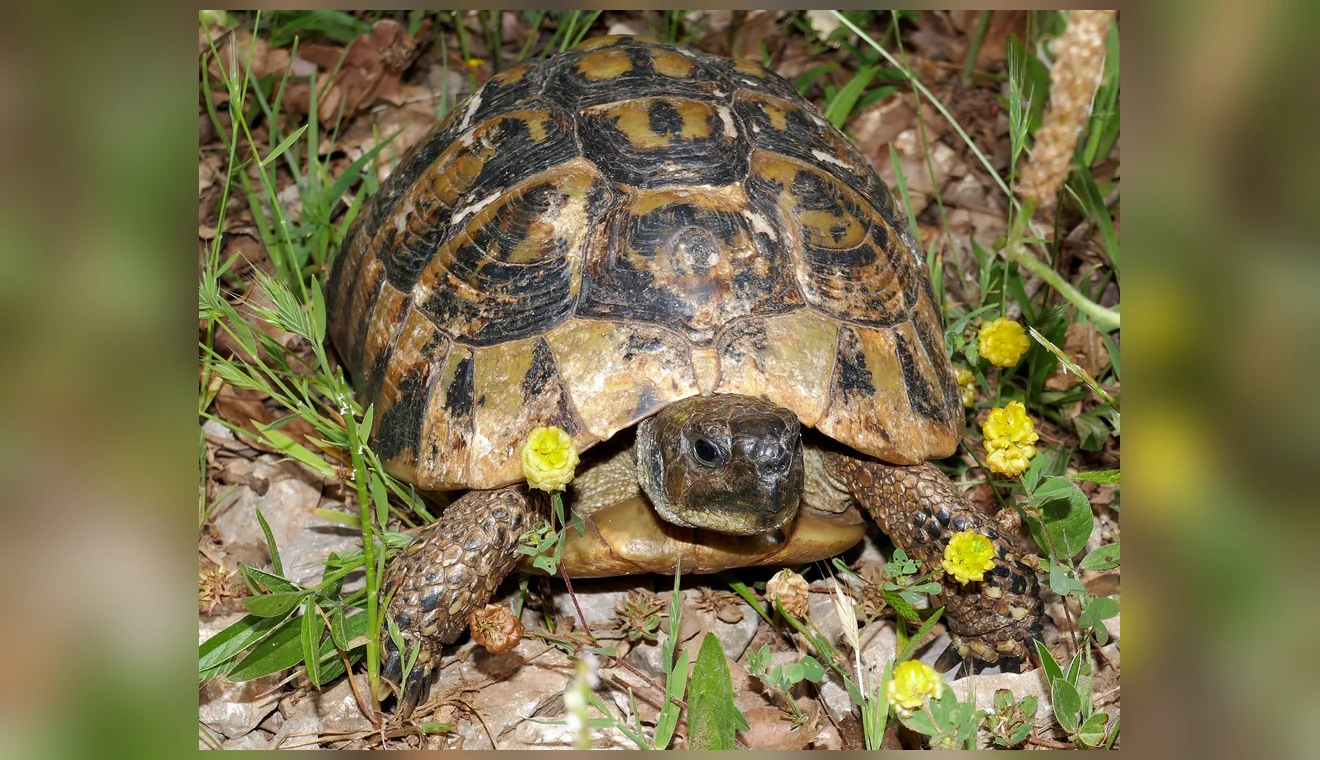
For commonly kept Mediterranean tortoises, the foundation is a wide variety of safe, fibrous weeds, leaves and flowers. The Tortoise Table recommends varied forage rather than fruit, protein-rich feeds or a daily bowl of supermarket lettuce. The Royal Veterinary College similarly advises that suitable weeds should form most of a Mediterranean tortoise's diet.
Which tortoises is this guide for?
The advice here is aimed primarily at Hermann's, Greek or spur-thighed, marginated and Horsfield's tortoises. They are widely kept in Britain but do not all have identical needs.
Red-footed tortoises, leopard tortoises and sulcatas have substantially different dietary patterns. Do not apply a Mediterranean feeding list automatically to a tropical forest or predominantly grass-eating species.
If you inherited a tortoise and aren't sure which it is, have the species identified before deciding on its feeding plan. A reptile-experienced vet can also consider its health, growth and body condition.
What should a Mediterranean tortoise eat daily?
The Tortoise Table emphasises fresh, safely identified forage and variety. The Royal Veterinary College states that weeds should normally be the main dietary component, rather than supermarket salad mixes.
| Food group | Place in the diet | Important point |
|---|---|---|
| Suitable wild weeds and flowering plants | Main daily foundation | Identify each plant and use several species |
| Appropriate cultivated edible leaves | Useful addition | Grow without sprays and confirm suitability |
| Selected supermarket greens | Limited fallback or supplement | Not a replacement for varied forage |
| Fruit and sweet vegetables | Generally avoid as regular food | Too much sugar for these grazing species |
| Animal protein and dog or cat food | Not appropriate | Can create serious nutritional problems |
| Fresh clean water | Available at all times | Use a shallow accessible dish |
A successful diet isn't one particular perfect plant. It is a reliable supply of several appropriate species over time.
Why variety matters
Wild tortoises may browse many different types of vegetation throughout the seasons. A limited captive menu cannot reproduce every wild plant, but you can avoid depending on just two.
The Tortoise Table explains that it is better to provide a mixture of verified safe leaves and flowers, taking note of whether each plant is rated suitable, moderate or sparing.
A tortoise may pick out its favourite leaf first. Don't let that preference become a diet consisting of almost nothing else.
Keep a labelled selection of plants you can identify reliably, then rotate them as available.
Suitable examples of wild forage
The Royal Veterinary College names plants such as sow thistle, plantain, chickweed and certain dandelions as possible components of Mediterranean tortoise diets.
But a common name alone is not proof that a collected leaf is suitable. Botanical identification and the current entry in The Tortoise Table's plant database matter.
Our Tortoise-Safe Weeds UK Guide covers identifying and sourcing forage rather than guessing from leaves.
Never collect from roadsides, sprayed parks, agricultural margins or areas contaminated with waste. Wash suitable plants and discard anything you can't identify.
Can tortoises eat dandelions?
Correctly identified common dandelions are familiar forage, but The Tortoise Table rates them as feed in moderation.
This means they are not an ideal one-plant daily menu, even though many tortoises enjoy them.
The moderation advice takes account of natural plant compounds, which may differ across growth stages and growing conditions.
Mix verified dandelions with other appropriate forage. Do not treat flowers as a substitute for a balanced selection of leafy plants.
Are supermarket greens suitable?
Supermarket greens are often the easiest option when little grows in the garden. Some are more useful than others, but they shouldn't displace the main forage diet when appropriate weeds are available.
The Tortoise Table notes that certain greens, including kale and some cabbage relatives, have particular nutritional strengths and drawbacks. That is why they need variety rather than being offered exclusively.
Wash all vegetables and check each specific plant before feeding. Avoid flavoured salad kits, dressings and wilted mouldy leftovers.
Iceberg lettuce contains a lot of water but isn't a satisfactory sole food.
Why fruit should be limited
Mediterranean grazing tortoises aren't adapted to a regular sugar-rich fruit menu.
The Tortoise Table describes fruit as an inappropriate regular choice for many species and notes that some tropical tortoises have different needs.
A tortoise accepting strawberry or apple doesn't demonstrate that the food is nutritionally suitable.
If an owner wants to offer variety, additional verified leaves and flowers are generally more useful than fruit.
Ask a reptile vet before changing a diet for an ill or underweight animal.
Calcium, UVB and shell development
Calcium intake and appropriate ultraviolet light are part of normal shell and skeletal health.
The Royal Veterinary College advises appropriate vitamin and mineral supplementation in Mediterranean tortoise care, with emphasis on calcium and a suitable calcium-to-phosphorus balance.
How much supplementation is appropriate depends on the whole diet, UVB setup and the animal's development. Avoid stacking several high-dose powders without reptile veterinary advice.
Our Tortoise UVB Lighting Guide explains the lighting side of the habitat.
Softening shell, weakness, abnormal growth or poor movement calls for veterinary assessment rather than a casual supplement change.
How much food should you give?
There isn't one universal bowl weight that suits every Mediterranean tortoise.
The Tortoise Table recommends watching healthy gradual growth, feeding appropriate variety and adjusting quantities according to individual condition and development.
A very young animal, mature adult and tortoise recovering from illness have different requirements.
Use regular weights and body-condition observations with the help of a reptile vet. Don't feed until the animal becomes visibly obese simply because it keeps approaching the dish.
A tortoise may also eat naturally growing safe plants while outside, which affects what it consumes.
Fresh drinking water remains essential
Keep a clean shallow water dish accessible.
The Royal Veterinary College recommends a suitable dish that allows access without trapping or tipping the animal.
Replace soiled water frequently and check that substrate has not filled the container.
Do not assume that feeding moist leaves removes the need for drinking water.
An animal with sunken eyes, unusual lethargy or concern about dehydration needs proper veterinary assessment.
Feeding in the British winter
British winter weather limits the supply of fresh safe weeds. An active indoor-kept tortoise still needs appropriate food and the right environmental conditions.
Growing a selection of verified plants in untreated trays can reduce dependence on poor supermarket substitutes.
The Tortoise Table allows some additional salad vegetables when suitable wild plants are unavailable, but the exact mix should still reflect species requirements.
If the animal is on a properly assessed brumation plan, don't improvise feeding or heating changes from a generic calendar.
Avoid using winter as a reason to switch to high-protein pellets intended for another reptile.
Food hygiene and safe collection
Keep any collection container clean and separate from household chemicals.
Reject plants covered in mould, sprays or heavy animal waste. Never use lawnmower clippings, which can heat and spoil rapidly.
Remove uneaten wet foods before they decay in the enclosure.
A feeding slate or other clean shallow surface may help stop large amounts of substrate being picked up with the food.
Check that your tortoise cannot overturn a heavy plate or become trapped between it and enclosure furniture.
Signs the diet may be unsuitable
Rapid abnormal growth, poor shell condition, obesity, weight loss and unusual droppings may indicate nutritional or wider husbandry issues.
But symptoms do not identify a vitamin deficiency on their own.
A reptile vet should assess the animal's actual species, temperatures, lighting, diet and health before treatment.
Sudden loss of appetite may relate to incorrect basking conditions, seasonal change or illness. Don't respond simply by offering ever-sweeter foods.
Our Tortoise Table Setup Guide explains how housing influences feeding and digestion.
Common feeding mistakes
Relying on a bag of salad every day
Aim for varied suitable forage, grown or collected safely.
Treating dandelions as unlimited food
The Tortoise Table rates them as feed in moderation.
Offering fruit as a staple
Mediterranean tortoises generally need a fibrous herbivorous diet.
Using unidentified garden weeds
A wrong plant can be poisonous regardless of how fresh it looks.
Adding supplements without reviewing UVB
Diet and environment work together, and excessive dosing is not automatically safer.
Frequently asked questions
Can Hermann's tortoises eat supermarket lettuce?
Some suitable greens may be used as a supplement, but lettuce alone is a poor long-term diet.
Do tortoises need a calcium supplement?
Appropriate supplementation may be needed. Ask an experienced reptile vet for a plan suited to the animal's diet, species and UVB.
Is fruit safe every day?
Not as a routine food for Mediterranean grazing tortoises.
Can I feed the same weeds all year?
Variety is preferable. Check seasonal availability, botanical identity and current plant ratings.
Build a varied diet around verified plants
The easiest way to improve a Mediterranean tortoise's food isn't to buy another brightly packaged treat. It's to identify and grow a useful collection of suitable forage.
Feed variety, keep clean water available and review shell health, weight and the complete habitat. That combination does more than any single “superfood”.
Sources and further reading
- The Tortoise Table: Mediterranean Tortoise Diet — forage variety, vegetables, water and species differences.
- Royal Veterinary College: Caring for Your Mediterranean Tortoise — weed-based feeding and calcium.
- The Tortoise Table Plant Database — named plant ratings.